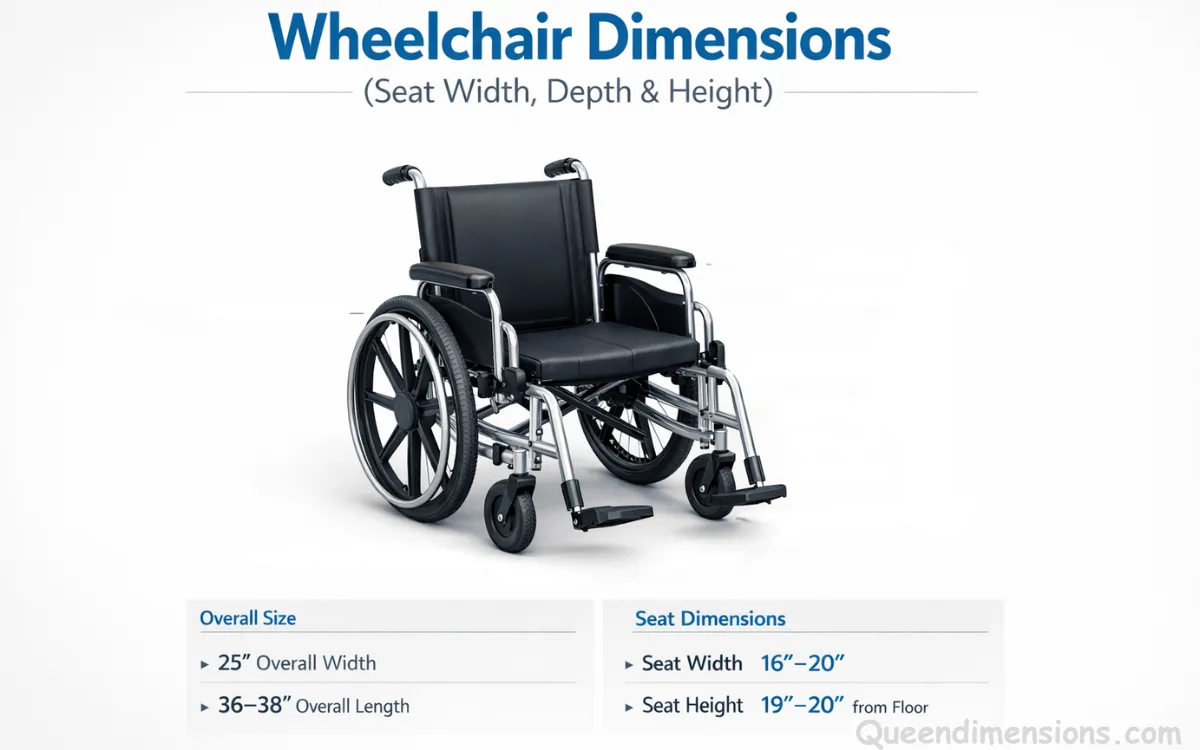
Standard wheelchair dimensions measure 25 inches wide and 36-38 inches long for most adult models. A typical wheelchair seat width ranges from 16 to 20 inches, while seat height sits at 19-20 inches from the floor. These measurements directly impact daily comfort, doorway clearance, and independent mobility for wheelchair users in the USA.
Proper wheelchair sizing ensures safe transfers, prevents pressure sores, and maintains healthy posture throughout the day. Getting the right fit matters for both manual and power models.
Standard Wheelchair Dimensions and Measurements
Overall Width, Length, and Height Specifications
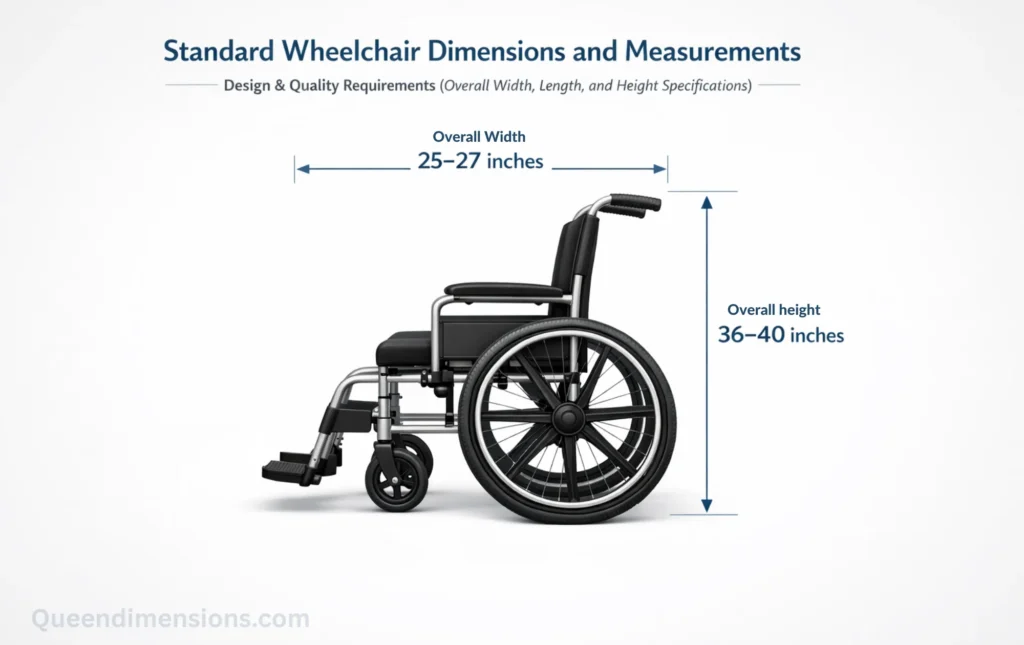
Standard adult wheelchairs measure 25-27 inches in overall width. This dimension includes the wheels and frame, not just the seat. The length typically extends 42 inches from front casters to rear wheels.
Overall height ranges from 36 to 40 inches, measured from the ground to the push handles. This allows caregivers to comfortably maneuver the chair without straining their backs or shoulders.
Seat Width Categories (16″ to 30″)
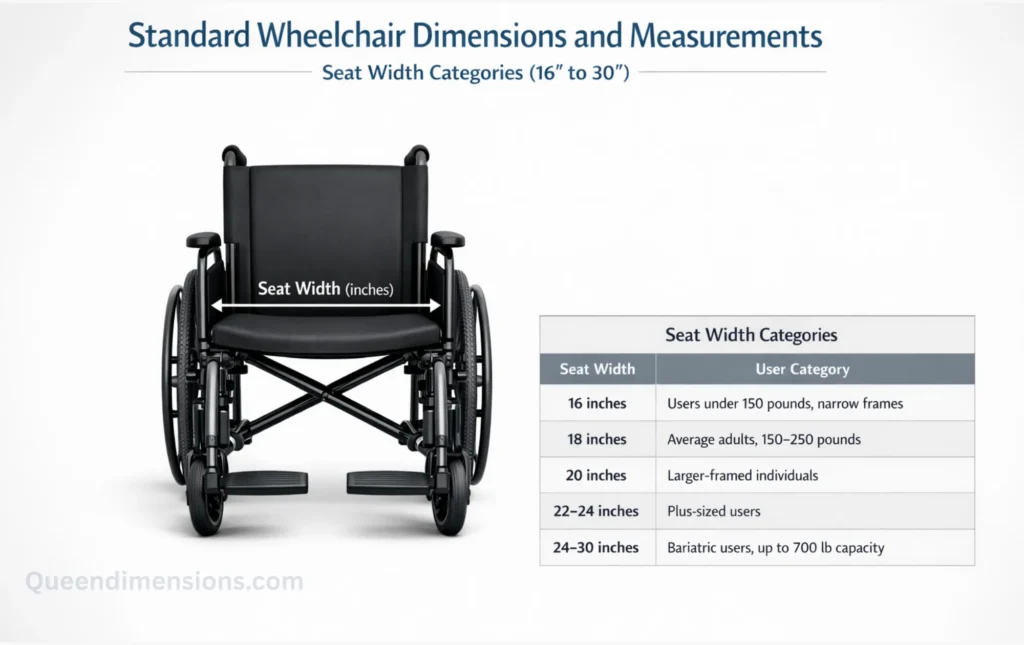
Seat width determines comfort and proper hip support. A 16-inch seat suits users under 150 pounds with narrow frames. The most common 18-inch width accommodates average adults weighing 150-250 pounds comfortably.
Wide seats at 20 inches fit larger-framed individuals, while 22-24 inch widths serve plus-sized users. Bariatric wheelchairs offer 24-30 inch seats for those requiring heavy-duty support up to 700 pounds capacity.
Seat Depth and Height Standards
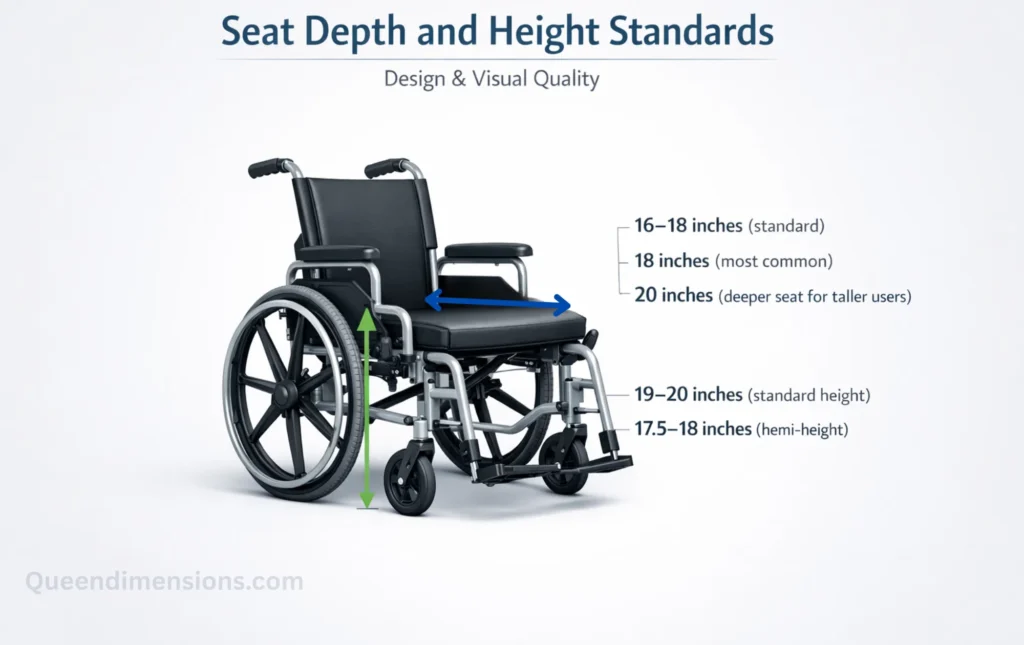
Seat depth measures from the backrest to the front edge. Standard depth runs 16-18 inches, with 18 inches being most common. Deeper 20-inch seats accommodate taller users with longer thighs.
Seat height sits 19-20 inches from the floor for most wheelchairs. Lower hemi-height models measure 17.5-18 inches, allowing shorter users to propel themselves by touching feet to the floor. Higher seats work better with elevated leg rests.
Armrest and Backrest Height Requirements

Armrest height should position 1 inch above the elbow when arms rest at 90-degree angles. This prevents shoulder strain and maintains proper posture. Standard armrests sit approximately 30 inches from the ground.
Backrest height ranges from 16 inches for active users to 20+ inches for those needing full trunk support. Measure from the seat surface to just below the shoulder blades, then subtract 4 inches for optimal positioning.
RAM Bed Dimensions(Length, Width, Depth & Cargo Specs)
Wheelchair Sizing Chart by Type and Weight Capacity
Manual Wheelchair Dimensions (Standard, Narrow, Wide)

Narrow manual wheelchairs measure 23 inches overall width with 16-inch seats. These models support up to 250 pounds and navigate tight spaces like older homes with 28-inch doorways.
Standard manual chairs span 25 inches wide with 18-inch seats, handling 300-pound capacity. Wide models reach 27 inches overall with 20-inch seats, supporting 350 pounds comfortably.
Power Wheelchair Dimensions and Specifications
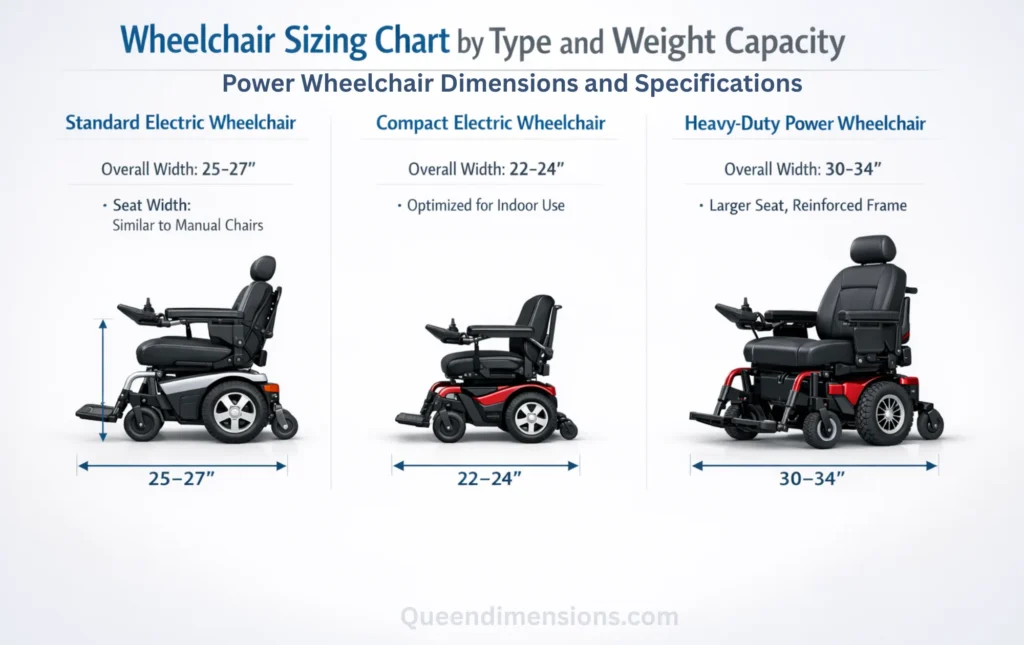
Electric wheelchairs measure wider due to motors and batteries. Standard power chairs span 25-27 inches with similar seat widths to manual models. Compact versions measure 22-24 inches for indoor maneuverability.
Heavy-duty power wheelchairs extend to 30-34 inches overall width. These accommodate larger seats and reinforced frames while maintaining stability through wider wheelbases and lower centers of gravity.
Bariatric Wheelchair Sizes (500-700 lbs Capacity)

Bariatric wheelchairs feature reinforced steel frames and wider seats. Models with 24-inch seats measure 32 inches overall and support 500-pound capacity. The largest 30-inch seat versions span 38 inches wide.
Weight capacity ratings include the user plus any medical equipment or accessories. Always verify the maximum weight limit matches actual needs with a safety margin of 50-75 pounds.
Pediatric and Transport Wheelchair Measurements
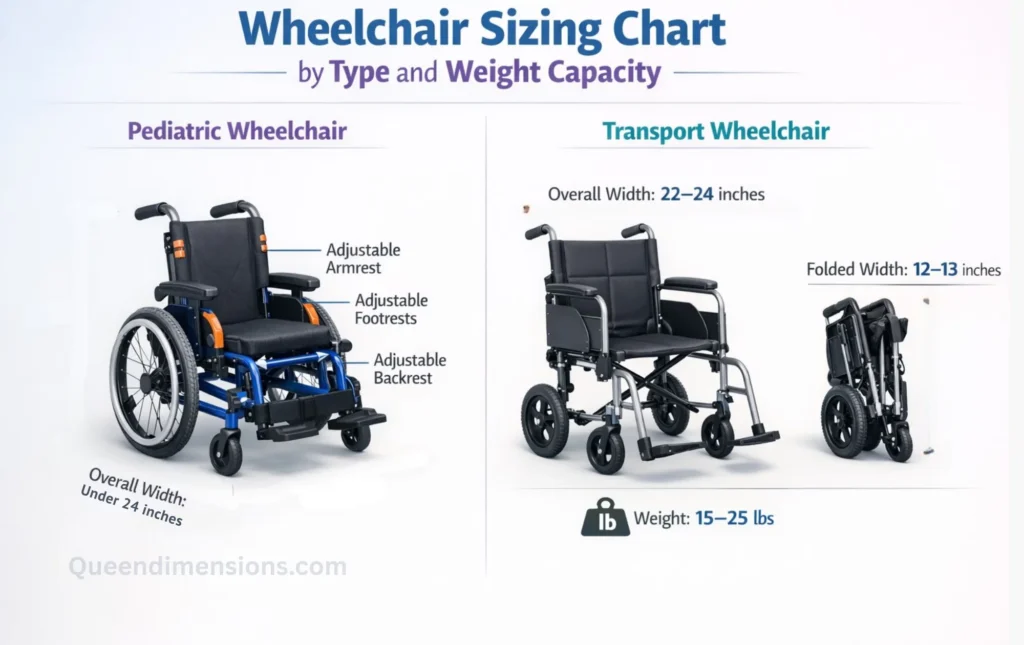
Pediatric wheelchairs scale down proportionally for children. Seat widths run 10-16 inches with overall widths under 24 inches. Many feature adjustable components to grow with the child over several years.
Transport wheelchairs prioritize portability over self-propulsion. These lightweight models weigh 15-25 pounds with smaller 8-inch rear wheels. Overall width measures 22-24 inches, and they fold to 12-13 inches for vehicle storage.
How to Measure for the Right Wheelchair Fit

Step-by-Step Body Measurement Guide
Take all measurements while seated with back against a flat surface. Keep hips, knees, and ankles at 90-degree angles following the “90-90-90 rule” recommended by physical therapists and occupational health specialists.
Seat Width Measurement (Hip to Hip + 2″)
Measure across the widest point of the hips or thighs while sitting. Add 1-2 inches to this measurement for comfortable clearance. This extra space prevents pressure on hip bones and allows repositioning without friction.
Seat Depth Measurement (Buttocks to Knee – 2″)
Seat depth determines leg support without restricting circulation. Measure from the back of the buttocks along the outside of the thigh to the knee fold. Subtract 2-3 inches from this measurement.
Proper Seat Height and Leg Rest Length
For self-propelled chairs, measure from heel to the back of the knee. This allows heels to touch the floor for better control and stability.
Leg rest length should position footrests 1-2 inches off the ground. Measure from the seat edge to the heel while seated, accounting for any cushion thickness that raises sitting position.
King Bed Size and mattress Dimensions(Size, Height, Length & Width)
Wheelchair Doorway and Space Requirements
Standard Doorway Width Clearance (30-32 inches)
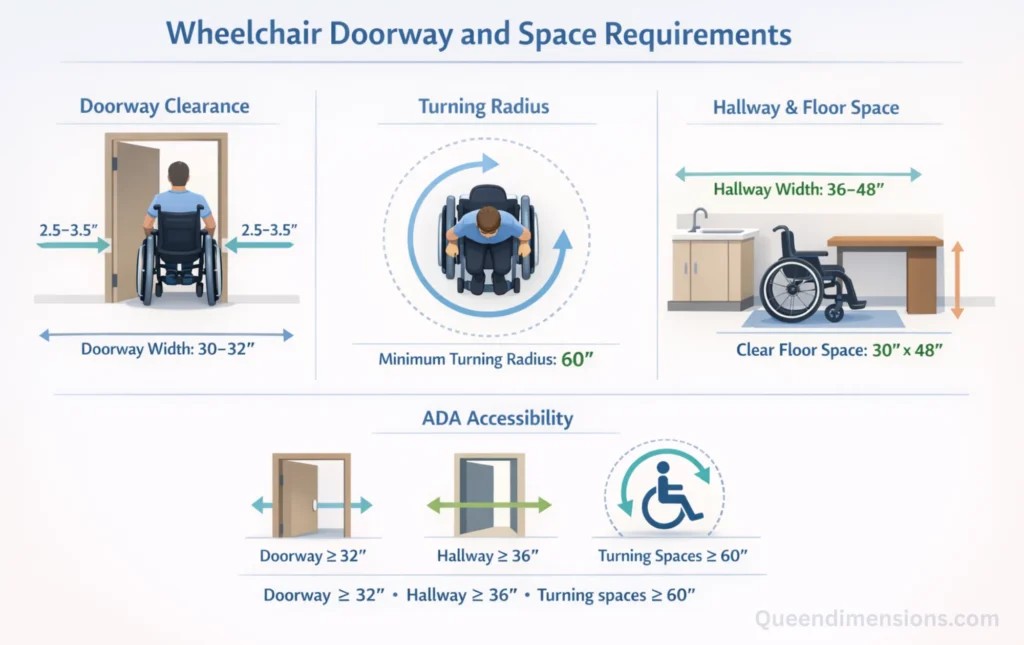
Most US doorways measure 30-32 inches wide. A standard 25-inch wheelchair passes through with 2.5-3.5 inches of clearance on each side. This allows smooth passage without scraping door frames or catching fingers.
Interior doorways in older homes sometimes measure only 28-30 inches. In these cases, narrow 23-inch wheelchairs provide necessary clearance while maintaining structural integrity and user safety.
Minimum Turning Radius (60-inch Diameter)
Complete 180-degree turns require approximately 60 inches of clear diameter space. This measurement determines whether users can turn around in hallways, bathrooms, or small rooms without multiple repositioning movements.
Tight spaces demand three-point turns or backing up to navigate. Planning home layouts with 5-foot turning circles in key areas dramatically improves daily independence and reduces caregiver assistance needs.
Hallway Width and Clear Floor Space Standards
Hallway width should measure at least 36 inches for straight-line wheelchair passage. Comfortable navigation requires 42-48 inches, allowing direction changes without constant wall contact or tire marks.
Clear floor space needs 30 x 48 inches for stationary positioning. This rectangular area lets wheelchair users approach desks, sinks, counters, and other fixtures without obstruction or tight maneuvering.
ADA Accessibility Requirements for Public Spaces
The Americans with Disabilities Act (ADA) mandates 32-inch minimum clear width for doorways in public buildings. Hallways must provide 36-inch continuous clear width, with 60-inch passing spaces every 200 feet.
Accessible routes require 32-inch minimum clearance, though 36 inches is recommended. Ramps cannot exceed 1:12 slope ratio, with level landings every 30 feet of horizontal run and at direction changes.
Choosing the Right Wheelchair Width
Narrowest Wheelchair Width (21-23 inches Overall)
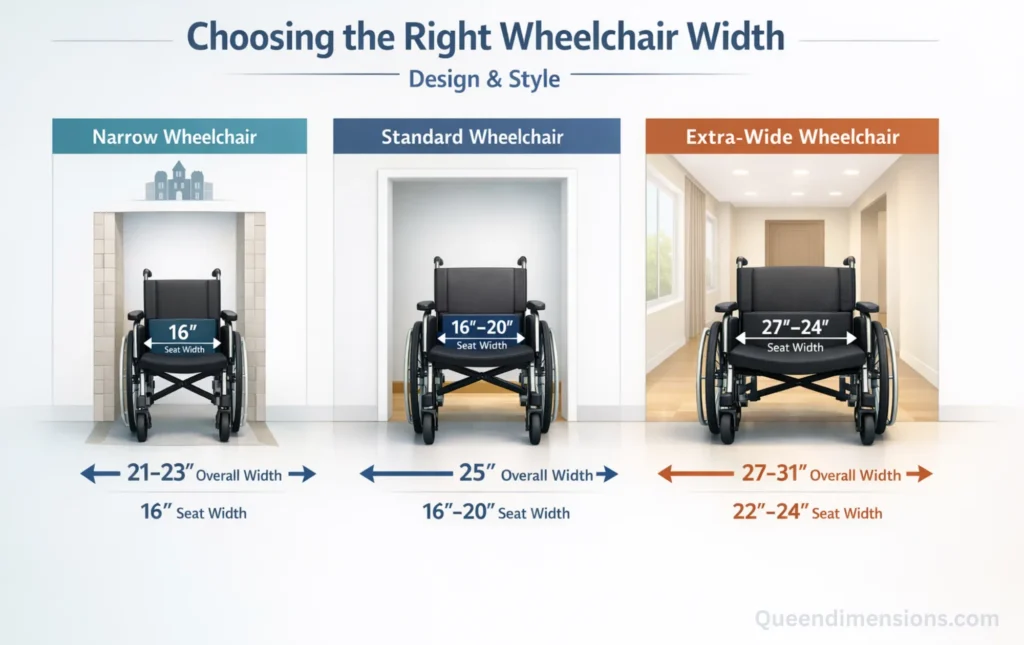
The narrowest wheelchairs measure 21-23 inches overall with 16-inch seats. These compact models navigate historic buildings, small bathrooms, and narrow store aisles where standard chairs cannot fit safely.
Ultra-narrow designs sacrifice some stability for maneuverability. They work best for smaller users under 150 pounds who need access to confined spaces but have adequate upper body strength for balance.
Standard vs. Extra Wide Wheelchair Dimensions
Standard 25-inch wheelchairs balance accessibility with stability. They fit through code-compliant doorways while providing adequate wheelbase for safe transfers and daily activities without tipping risks.
Extra wide models at 27-31 inches offer increased comfort for larger users. However, they require modified doorways, wider hallways, and careful space planning to ensure full home accessibility and independence.
Choosing Width Based on Indoor vs. Outdoor Use
Indoor wheelchairs prioritize narrow profiles for home navigation. Measure your narrowest doorway, tightest hallway, and smallest room before selecting a chair. Leave 2-3 inches clearance minimum for safe passage.
Outdoor models can utilize wider designs for better stability on uneven terrain. Power chairs for outdoor use often measure 26-28 inches, providing stability on slopes while maintaining reasonable maneuverability.
FAQ‘s
What size is a standard size wheelchair?
A standard wheelchair measures 25 inches wide overall with an 18-inch seat width, 36-38 inches in length, and 36 inches tall from ground to push handles.
Will a wheelchair fit through a 30-inch door?
Yes, a standard 25-inch wheelchair fits through 30-inch doors with 2.5 inches of clearance on each side for smooth passage without scraping.
What is the difference between 16-inch and 18-inch wheelchairs?
The measurement indicates seat width: 16-inch chairs suit users under 150 pounds, while 18-inch chairs accommodate average adults weighing 150-250 pounds more comfortably.
How wide does a space need to be for a wheelchair?
Hallways need 36 inches minimum for straight passage, and 60-inch diameter circles allow complete 180-degree turns in rooms or tight spaces.
What is the narrowest wheelchair width?
The narrowest wheelchairs measure 21-23 inches overall width with 16-inch seats, designed for navigating tight spaces in older homes and buildings.
What is a clear floor space for a wheelchair?
Clear floor space requires 30 x 48 inches, the minimum area needed for wheelchair users to position themselves at desks, sinks, or fixtures.
What are the four basic measurements for a wheelchair?
The four essential measurements are seat width (hip to hip), seat depth (buttocks to knee), seat height (heel to knee), and back height (seat to shoulder).
What kind of wheelchair will Medicare pay for?
Medicare covers medically necessary manual and power wheelchairs prescribed by doctors after face-to-face examinations, with documentation showing need for home mobility.
Is 32 inches wide enough for a wheelchair?
Yes, 32 inches exceeds ADA minimum standards and provides ample clearance for standard wheelchairs with comfortable passage room on both sides.
Conclusion
Proper wheelchair dimensions transform daily mobility from a challenge into manageable independence.
The right measurements prevent pressure injuries, reduce caregiver strain, and ensure safe navigation through homes and public spaces. Take time to measure accurately, consult professionals, and prioritize individual comfort over generic standards for the best long-term outcomes.

Hi, I’m Ethan Miller, the admin behind QueenDimensions.com. We make understanding Dimensions simple. Explore clear guides on realms, energy, and hidden layers of reality. No confusion, just clarity.