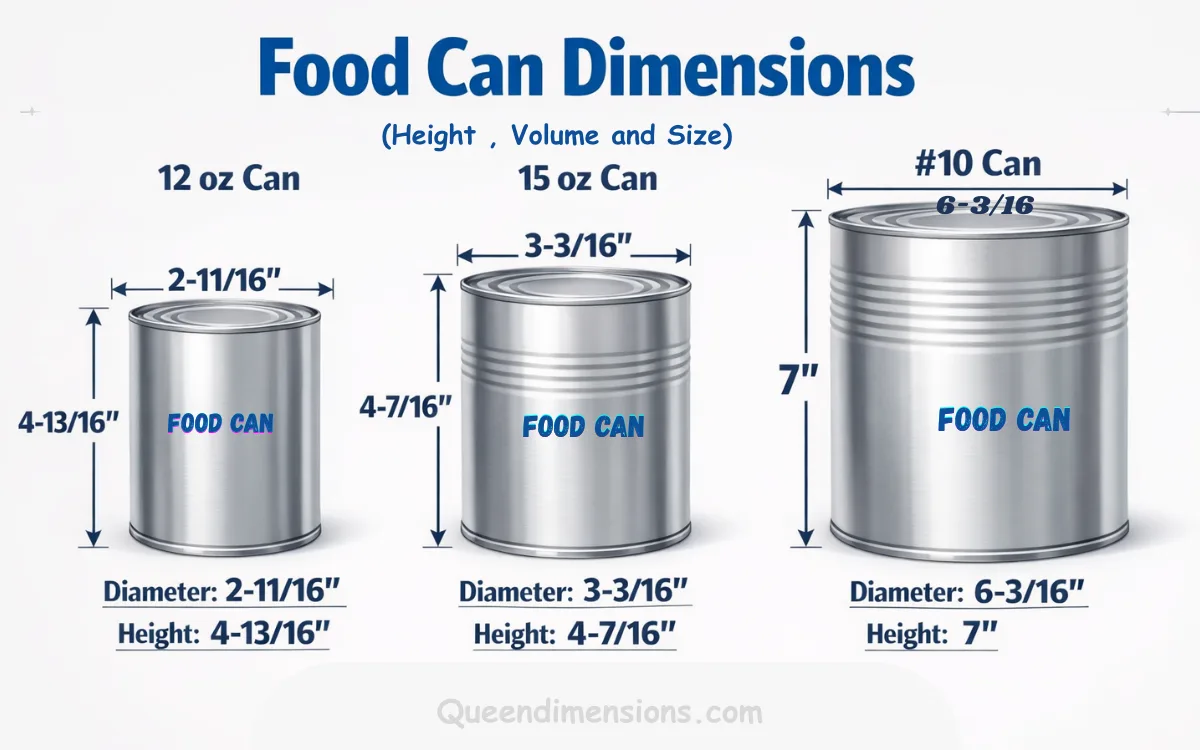
Food can dimensions follow a standardized system in the USA where diameter and height are measured in inches using a three-digit code. The most common sizes include 12 oz (2-11/16″ × 4-13/16″), 15 oz (3-3/16″ × 4-7/16″), and #10 cans (6-3/16″ × 7″), with measurements expressed as diameter first, then height in sixteenths of an inch.
This guide covers all standard food can sizes, measurement systems, volume conversions, and practical applications to help you choose the right can for storage, cooking, or bulk purchasing needs.
Standard Food Can Dimensions Chart
Standard food can sizes in the USA range from small 5 oz containers to large institutional #10 cans.
The three-digit can code system uses the first digit for whole inches and the second two digits for sixteenths of an inch. For example, 303 means 3 and 3/16 inches in diameter.
Small Retail Cans (5 oz – 16 oz Dimensions)
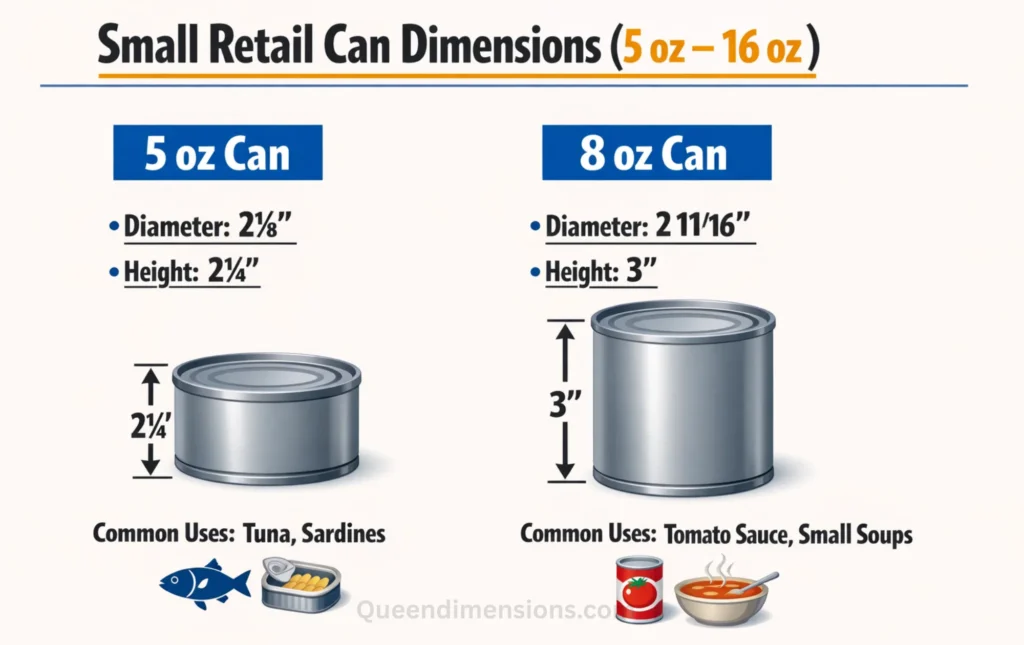
Small retail cans serve individual or small family portions. The 5 oz can measures 2-1/8″ diameter × 2-1/4″ height and holds items like tuna or sardines.
8 oz cans measure 2-11/16″ × 3″ and commonly contain tomato sauce or small soup portions. These compact sizes fit easily in pantries and reduce food waste for single servings.
Medium Commercial Cans (#300, #303, #2 Dimensions)
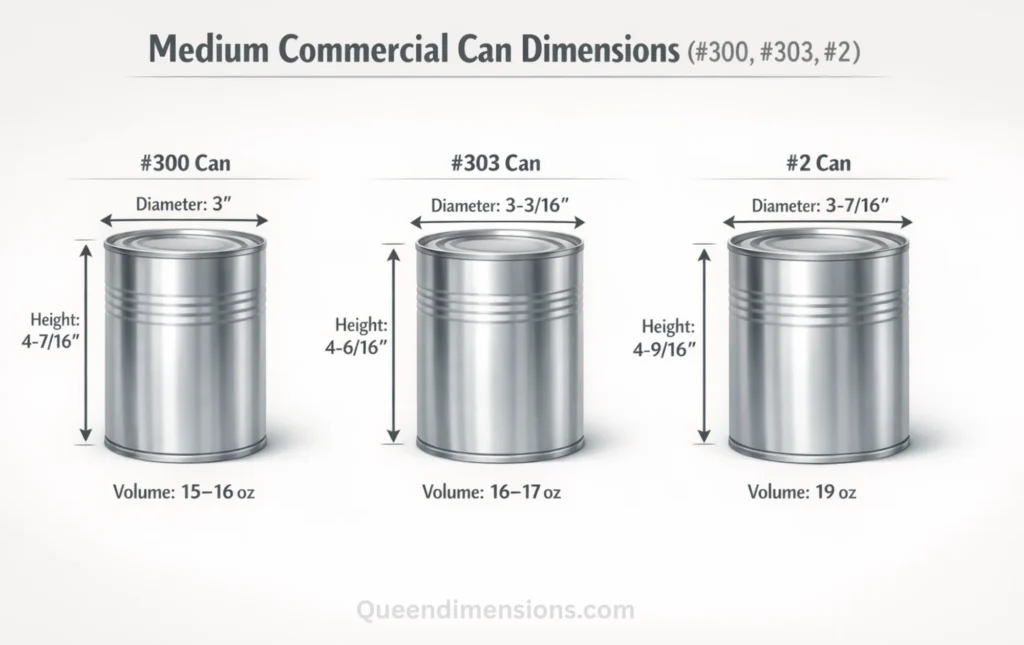
#300 cans measure 3″ diameter × 4-7/16″ height and hold 15-16 oz. This size dominates the canned vegetable market with over 50% of retail sales according to industry reports.
#303 cans (3-3/16″ × 4-6/16″) hold 16-17 oz and are the most recognized grocery store size. The #2 can measures 3-7/16″ × 4-9/16″ with 19 oz capacity, perfect for beans and whole tomatoes.
Large Foodservice Cans (#10, #5, #2.5 Dimensions)
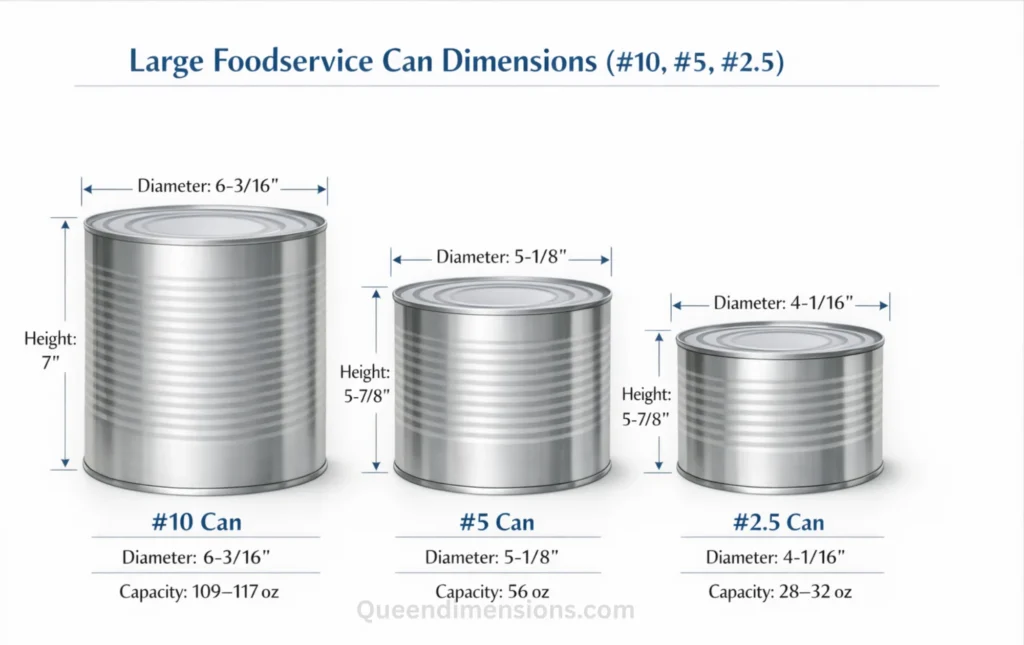
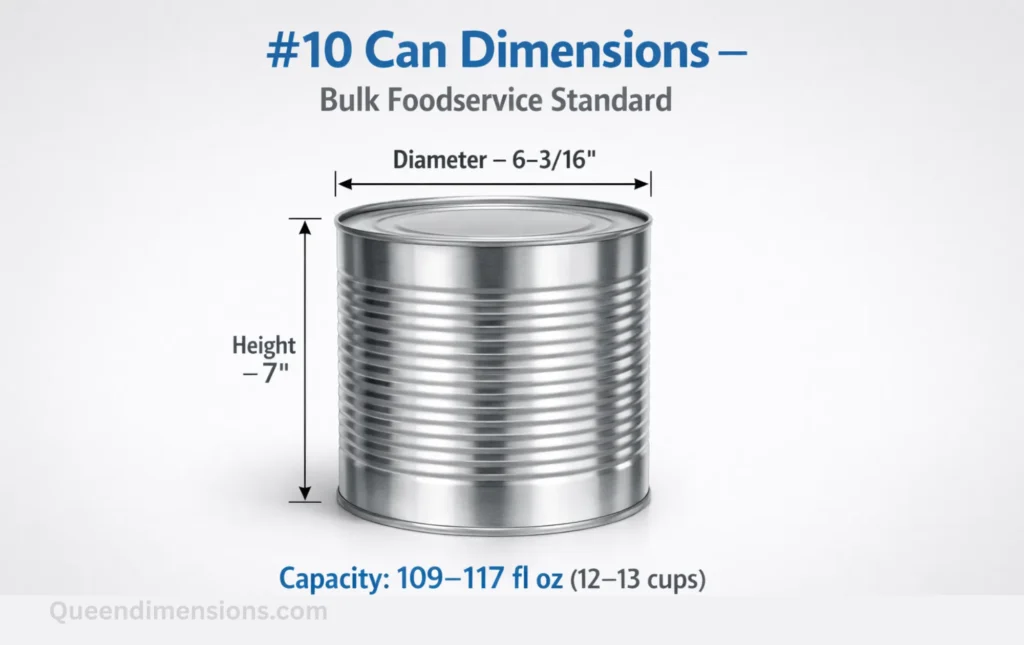
#10 cans are the foodservice industry standard, measuring 6-3/16″ diameter × 7″ height with 109-117 oz capacity (about 13 cups). These represent 30% of commercial foodservice packaging.
#5 cans measure 5-1/8″ × 5-7/8″ and hold 56 oz (7 cups), ideal for institutional soups and chili. #2.5 cans (4-1/16″ × 4-11/16″) contain 28-32 oz and bridge retail and foodservice needs.
Understanding Can Size Codes (211×400, 307×308, 603×700)
Can size codes express dimensions in a standardized format. The code 211×400 means 2-11/16″ diameter × 4″ height, commonly known as a #1 picnic can.
307×308 translates to 3-7/16″ × 3-8/16″ (or 3-1/2″) for a #2 short can. The 603×700 code indicates a #10 can at 6-3/16″ × 7″, the largest standard size.
RAM Bed Dimensions(Length, Width, Depth & Cargo Specs)
Common Food Can Sizes (Detailed Breakdown)
Common food can sizes cover 95% of retail and commercial packaging needs.
Volume measurements differ from weight—a 15 oz can refers to food weight, not fluid capacity. The actual liquid volume may be 14 fluid ounces due to product density.
12 oz Can Dimensions – Regular Tuna and Beverage Size
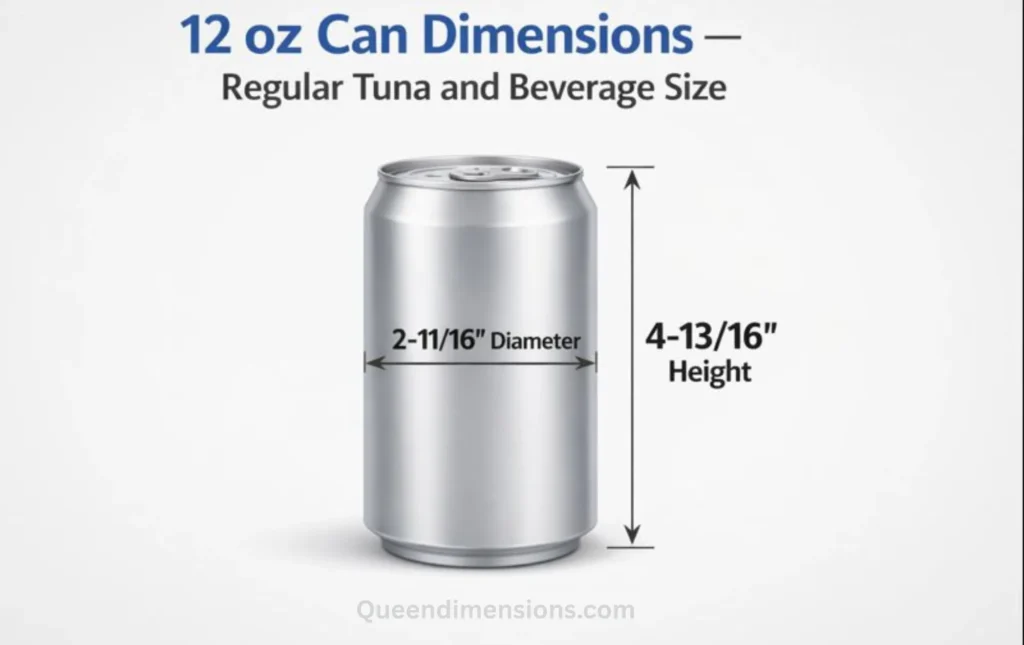
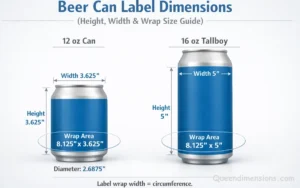
12 oz cans measure 2-11/16″ diameter × 4-13/16″ height. This is often called the “regular can” size for beverages and standard tuna packaging.
Beverage cans use this dimension for sodas and energy drinks. The narrow diameter fits standard cup holders while the height provides adequate volume for single servings.
15 oz Can Dimensions – Most Popular Vegetable Can
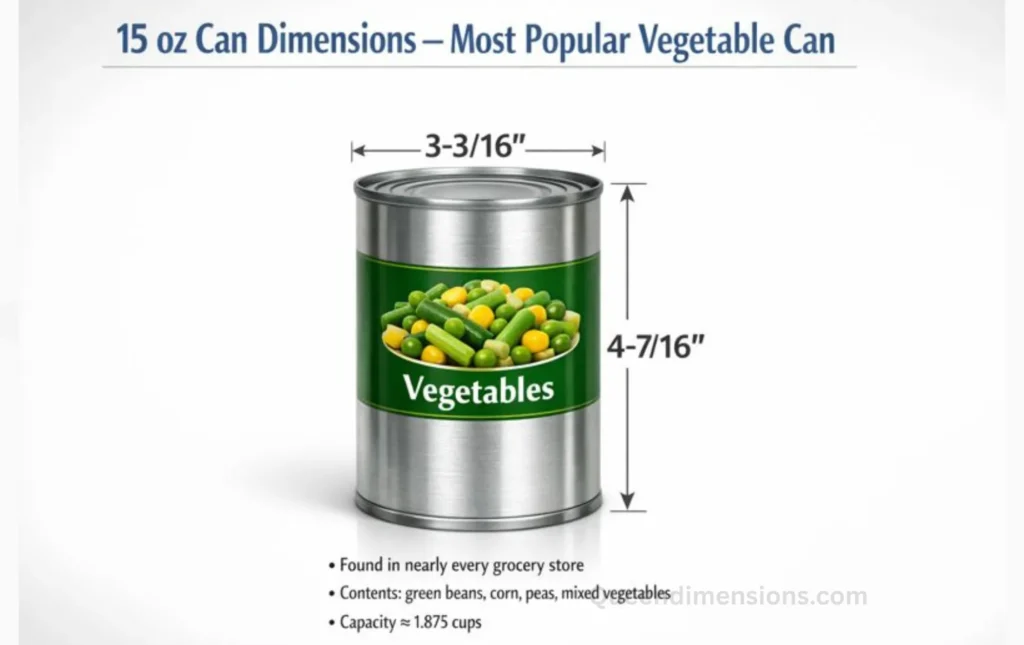
15 oz cans measure 3-3/16″ diameter × 4-7/16″ height. This is America’s most popular vegetable can size, found in nearly every grocery store.
Common contents include green beans, corn, peas, and mixed vegetables. The capacity equals about 1.875 cups, perfect for family side dishes serving 3-4 people.
16 oz Can Dimensions – Standard Retail Size
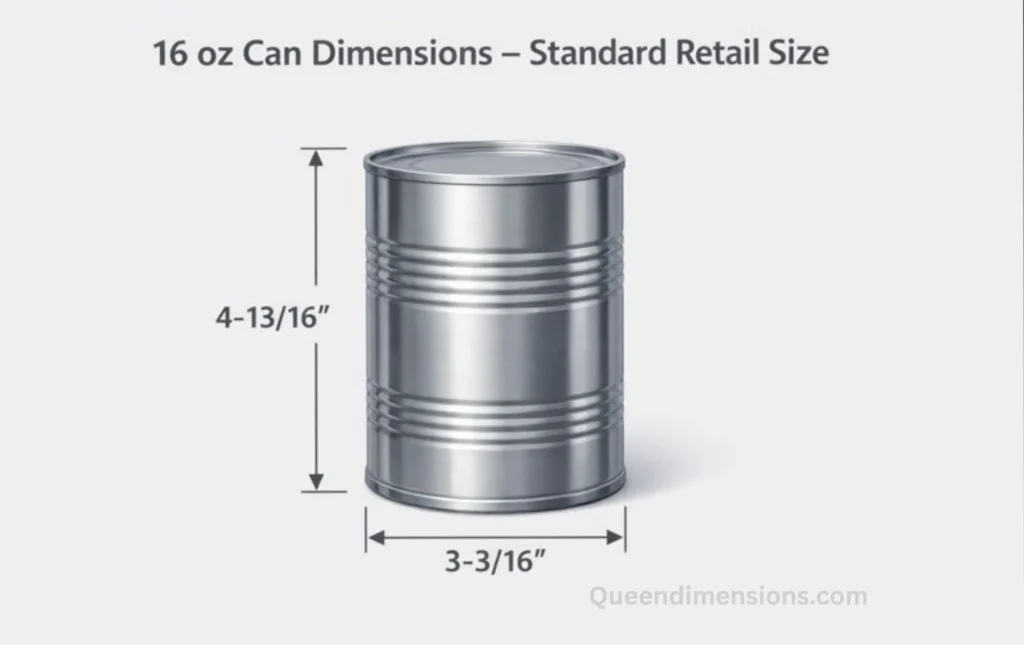
16 oz cans share the same 3-3/16″ diameter as 15 oz cans but stand taller at 4-13/16″ height. The extra height adds approximately1 oz more capacity.
This size commonly holds beans, tomatoes, and fruit. The slightly taller profile provides more product without requiring wider shelving space in stores or pantries.
28 oz Can Dimensions – Family-Size Convenience (#401)
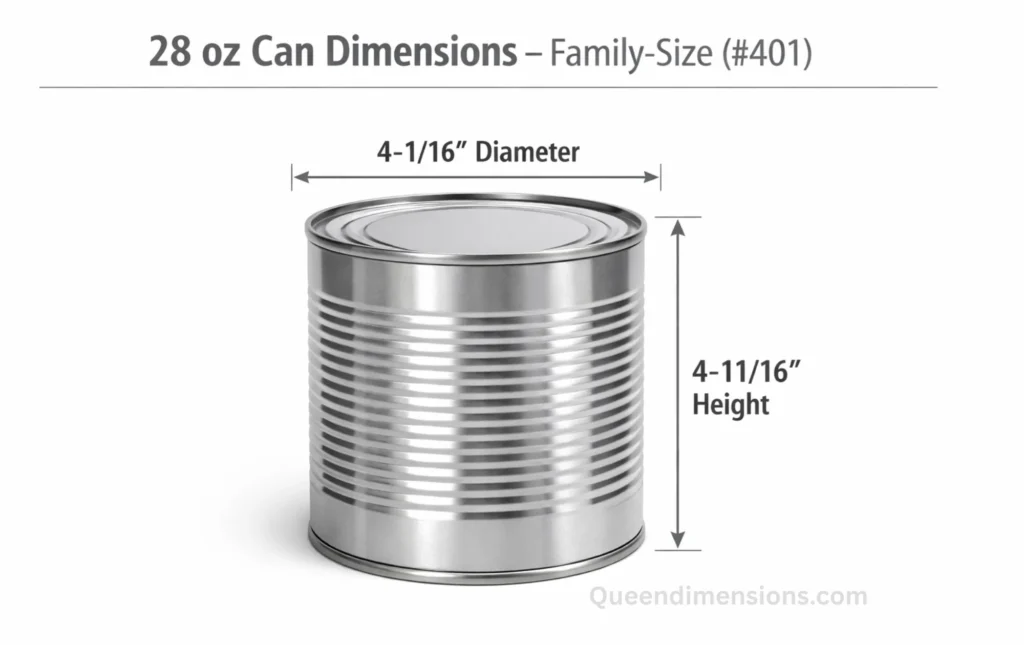
28 oz cans (#401 size) measure 4-1/16″ diameter × 4-11/16″ height. This family-size option reduces opening frequency for larger households according to packaging research.
Contents typically include crushed tomatoes, pumpkin puree, and large fruit portions. The wider diameter (over 4 inches) requires deeper cabinet shelves but provides economical bulk quantities.
#10 Can Dimensions – Bulk Foodservice Standard
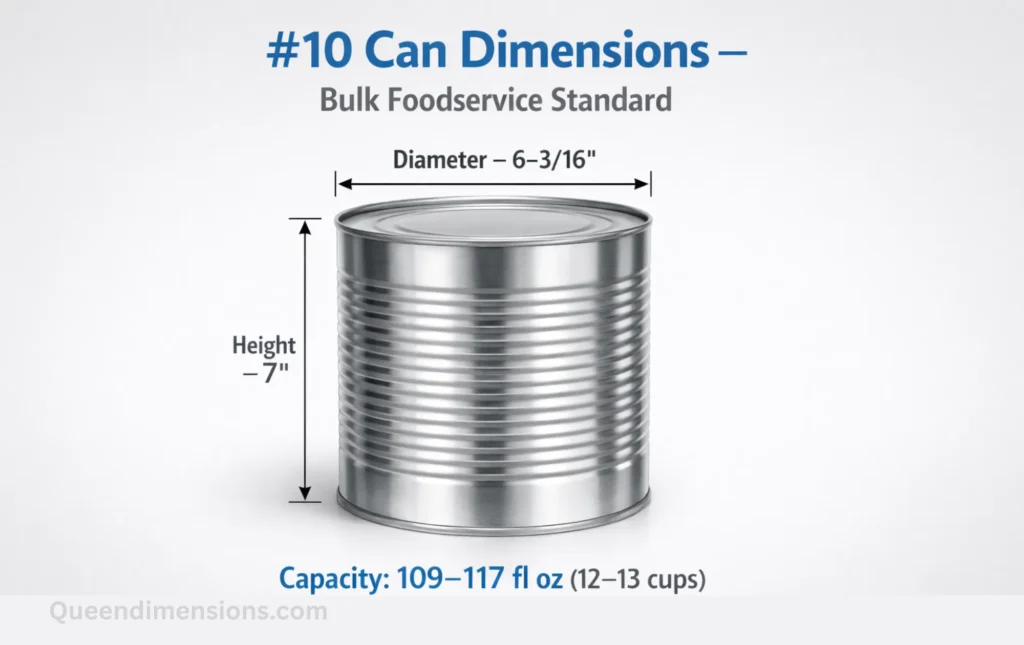
#10 cans measure 6-3/16″ diameter × 7″ height and hold 109-117 fluid oz (12-13 cups). These dominate commercial kitchens, restaurants, and institutional facilities.
Bulk items like peaches, sauce, vegetables, and beans fill these large containers. The #10 can saves space in commercial operations and offers the best cost per ounce for high-volume users.
Full XL Bed And Mattress Dimensions(Size, Height, Length & Width)
How to Read and Measure Food Can Dimensions
Reading can dimensions requires understanding the standardized measurement system. Most cans list size codes on the bottom or label for identification purposes.
Accurate measurements matter for custom labels, storage planning, and equipment compatibility. Industry standards ensure consistency within 1-2mm across different manufacturers.
The Three-Digit Can Code System Explained
Three-digit codes express can dimensions where the first digit shows whole inches. The second and third digits show sixteenths of an inch for precise measurements.
For example, 307 means 3 and 7/16 inches. A full code like 307×409 indicates 3-7/16″ diameter × 4-9/16″ height, following the diameter-first convention.
Measuring Food Can Diameter and Height at Home
Measure can diameter across the lid at the widest point, excluding any rim seams. Use a ruler or tape measure for accuracy within 1/16 inch.
Measure height from the flat bottom edge to the top rim edge. Avoid measuring curved areas or domed lids. These DIY measurements help verify can sizes for storage fits or label design.
Food Can Volume vs. Weight Key Differences
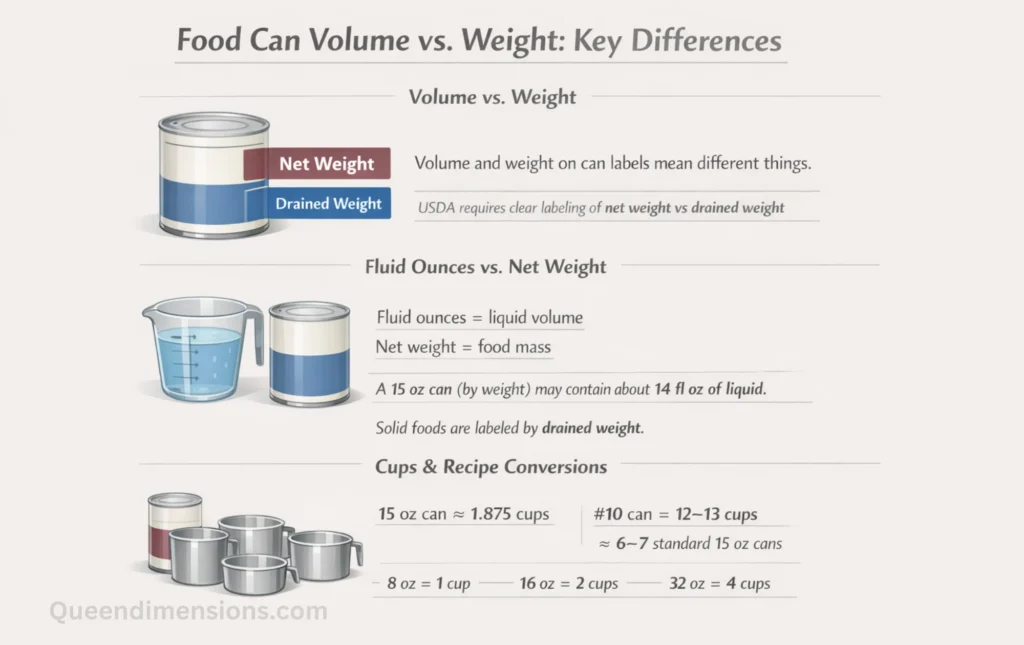
Volume and weight on can labels mean different things.
The USDA requires clear labeling of net weight versus drained weight. This helps consumers understand actual food content versus total package contents including liquids.
Understanding Fluid Ounces vs. Net Weight
Fluid ounces measure volume of liquid, while net weight ounces measure food mass. A 15 oz can (by weight) might contain only 14 fluid oz of liquid due to density differences.
Solid foods like beans are labeled by drained weight. The can may hold 15 oz of beans plus 4-5 oz of packing liquid, totaling higher gross weight.
Cup Measurements and Recipe Conversions
Cup conversions help with recipe substitutions. A standard 15 oz can equals approximately 1.875 cups (just under 2 cups) of product for cooking calculations.
#10 cans hold 12-13 cups, equivalent to about 6-7 standard 15 oz cans. When scaling recipes, use these conversions: 8 oz = 1 cup, 16 oz = 2 cups, 32 oz = 4 cups.
Two-Piece vs. Three-Piece Food Can Construction
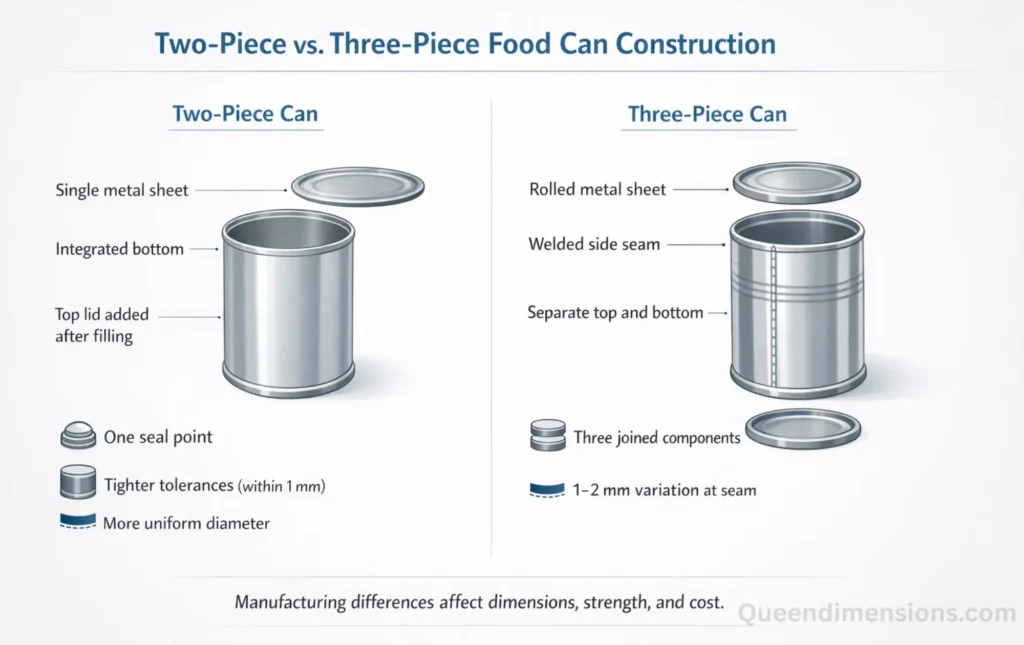
Can construction methods affect dimensions, strength, and cost. The two main types are two-piece drawn cans and three-piece welded cans, each serving different food products.
Manufacturing differences create slight dimensional variations. Two-piece cans maintain tighter tolerances (within 1mm) while three-piece cans may vary by 1-2mm at seams.
What’s the Difference in Can Design?
Two-piece cans form from a single metal sheet drawn into a cup with an integrated bottom. Only the top lid is added after filling, creating one seal point.
Three-piece cans use a flat sheet rolled into a cylinder with a welded side seam, plus separate top and bottom ends. This creates three components joined by double seaming.
Which Construction Type Affects Dimensions?
Two-piece construction provides more uniform diameter measurements due to seamless sides. These work best for liquids, soups, and beverages requiring pressure resistance.
Three-piece cans may show 1-2mm variation at the side seam area. They dominate solid food packaging like vegetables, beans, and fruits due to easier manufacturing and lower costs.
Food Can Materials and Their Impact on Size
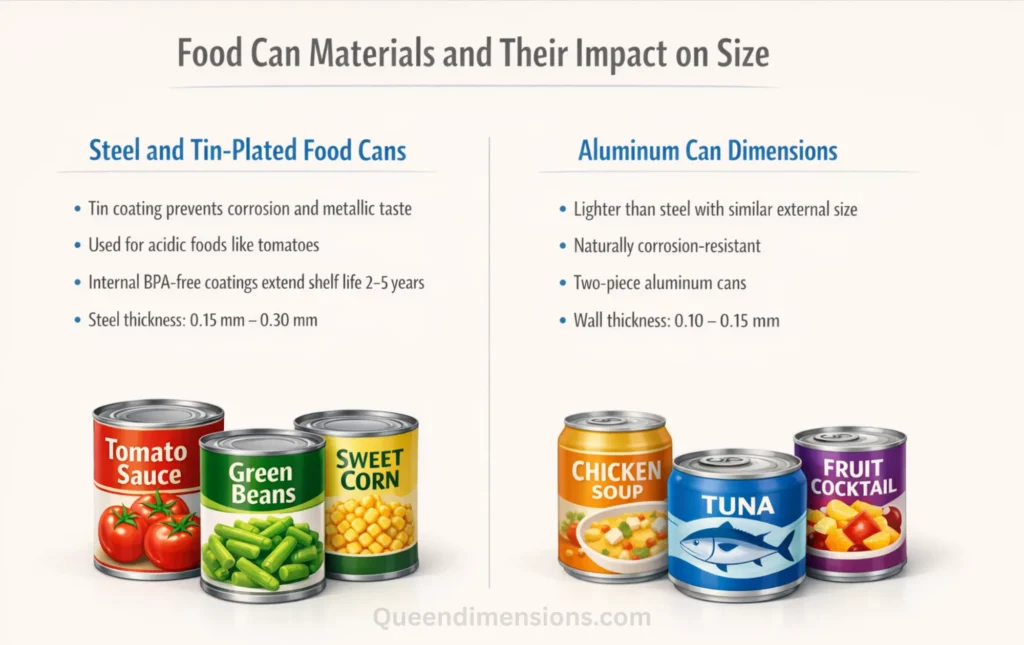
Can materials include steel, tin-plated steel, aluminum, and paper composites. Each material has different wall thicknesses that slightly affect internal capacity despite identical external dimensions.
Material selection depends on product acidity, processing temperature, and shelf life requirements. Steel cans dominate food packaging due to strength and heat resistance for retort sterilization.
Steel and Tin-Plated Food Cans
Steel cans (often tin-plated) are the most common food container material. The tin coating prevents corrosion and metallic taste, especially with acidic foods like tomatoes.
Internal coatings (often BPA-free lacquers) protect food quality and extend shelf life to 2-5 years. Steel thickness ranges from 0.15mm to 0.30mm depending on can size and contents.
Aluminum Can Dimensions
Aluminum cans weigh less than steel but maintain similar external dimensions. The lighter material reduces shipping costs and is naturally corrosion-resistant without tin plating.
Two-piece aluminum cans dominate beverage packaging and some food applications. Wall thickness averages 0.10-0.15mm, thinner than steel but adequate for lower-pressure products.
FAQ’s
What are standard food can sizes?
Standard sizes include #1 (10-12 oz), #2 (14-16 oz), #2.5 (26-28 oz), #3 (46 oz), #5 (56 oz), #10 (109-117 oz), plus 300, 303, 12 oz, 15 oz, and 16 oz retail sizes.
What are the dimensions of a 15 oz can?
A 15 oz can measures 3-3/16 inches in diameter and 4-7/16 inches in height, holding approximately 1.875 cups and commonly used for vegetables and beans.
What are the dimensions of a regular can?
A regular can (12 oz) measures 2-11/16 inches diameter × 4-13/16 inches height, standard for tuna, beverages, and single-serve portions with about 1.5 cup capacity.
How big is a 28 oz can?
A 28 oz can (#401 size) measures 4-1/16 inches diameter × 4-11/16 inches height, holding 3.25-3.5 cups, commonly used for family-size tomatoes and pumpkin.
What are the dimensions of a 16 oz can?
A 16 oz can measures 3-3/16 inches diameter × 4-13/16 inches height, slightly taller than the 15 oz can but same width, holding exactly 2 cups.
How big is a 14 oz tin?
A 14 oz tin measures 3-1/8 inches diameter × 4-3/8 inches height, a specialty size holding about 1.75 cups, used for specific sauces and smaller bean portions.
What are the dimensions of a standard 12 oz can?
A standard 12 oz can measures 2-11/16 inches (2.6875″) diameter × 4-13/16 inches (4.8125″) height, the most common beverage can size holding 1.25-1.5 cups.
What size is a 14 oz can?
A 14 oz can measures approximately 3-1/8 inches diameter × 4-3/8 inches height with 1.75 cup capacity, used for specialty products between standard 12 oz and 15 oz sizes.
Conclusion
Food can dimensions follow standardized codes that ensure consistency across the USA food industry. Understanding the three-digit measurement system helps you select appropriate sizes for home cooking, storage planning, or commercial operations.
The most practical sizes—12 oz, 15 oz, and #10 cans—cover the majority of consumer and foodservice needs. Always verify both diameter and height measurements when planning storage space or selecting equipment, as slight variations between manufacturers may affect compatibility with can openers and sealing machines.

Hi, I’m Ethan Miller, the admin behind QueenDimensions.com. We make understanding Dimensions simple. Explore clear guides on realms, energy, and hidden layers of reality. No confusion, just clarity.