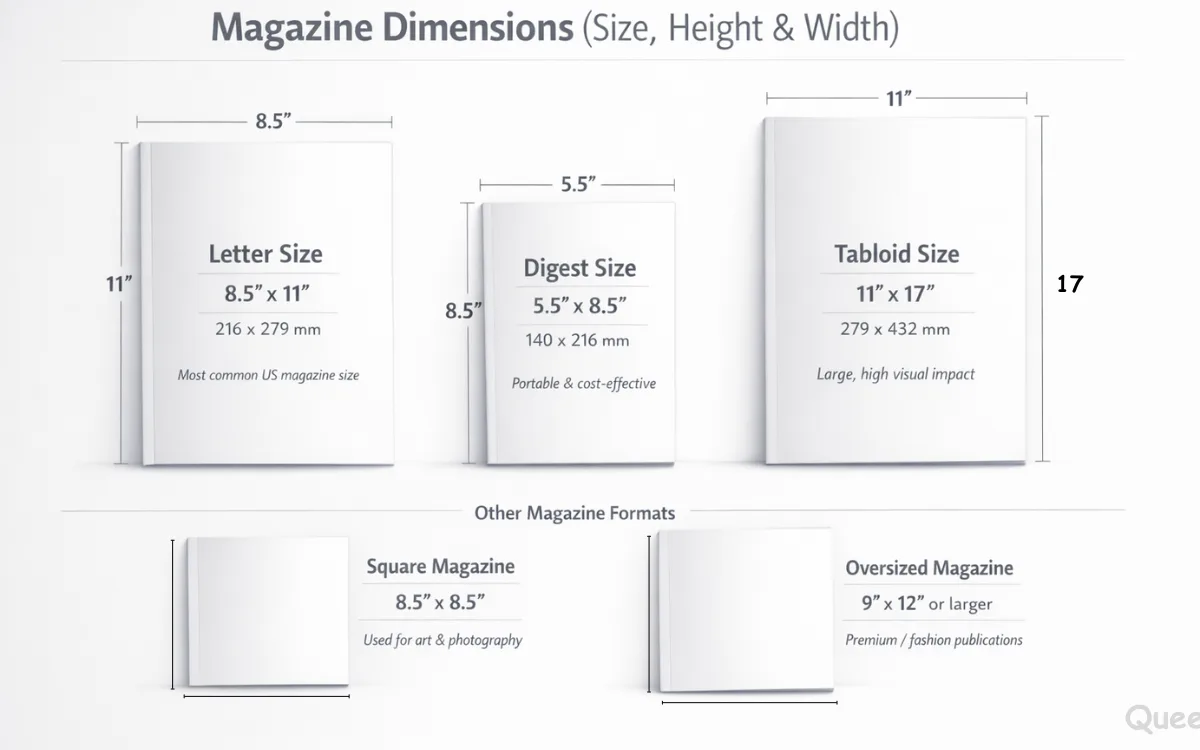
The standard magazine size in the USA measures 8.5 × 11 inches (216 × 279 mm), matching letter paper for printing efficiency. About 60–70% of American consumer magazines use this format because it reduces waste and fits standard equipment perfectly.
This guide covers all magazine formats, from compact digest sizes to oversized premium publications. You’ll learn exact measurements and how to choose the right dimensions for your content.
Standard Magazine Dimensions in the USA
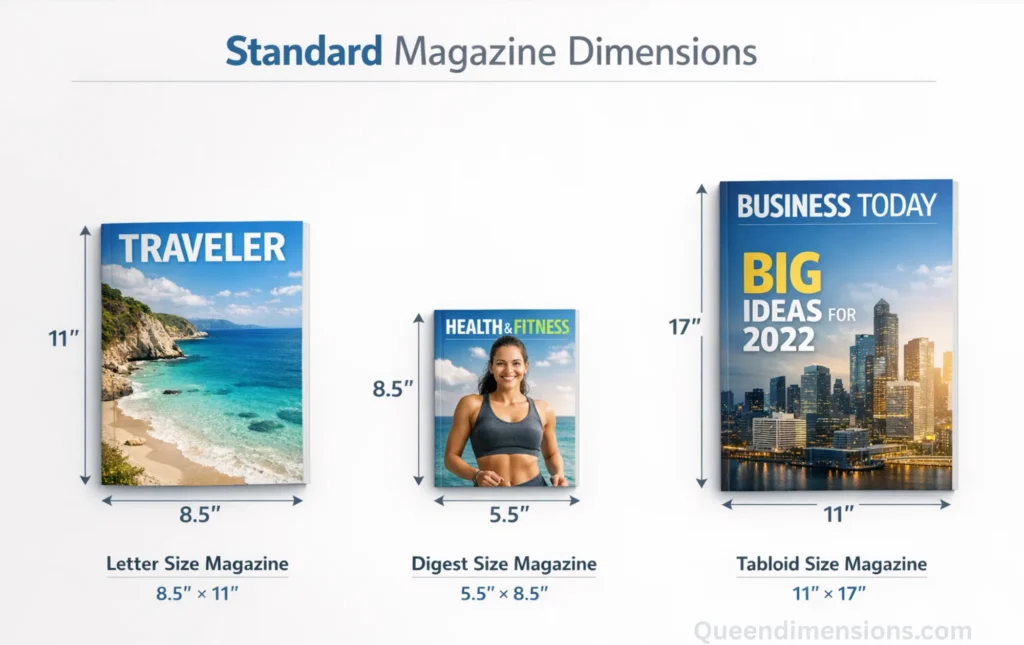
American publishers rely on three primary magazine sizes. Each format serves different content needs and budget requirements.
Letter Size Magazine (8.5 × 11 inches)
Letter size measures exactly 8.5 inches wide by 11 inches tall (216 × 279 mm). This is the most popular magazine format in America.
Time Magazine, People, and Cosmopolitan all use letter dimensions. The format provides ample space for high-quality photography, detailed articles, and effective advertising layouts. Readers find it comfortable to hold and easy to read.
Production costs stay low because this size matches standard office paper. Printers don’t waste material on custom cuts.
Digest Size Magazine (5.5 × 8.5 inches)
Digest magazines measure 5.5 × 8.5 inches (140 × 216 mm). This compact format fits perfectly in bags and coat pockets.
The smaller dimensions reduce paper costs by approximately 30-40% compared to letter size. Readers appreciate the portability for commuting and travel.Digest size works best for text-heavy publications.
Tabloid Size Magazine (11 × 17 inches)
Tabloid format spans 11 × 17 inches (279 × 432 mm). This large size creates dramatic visual impact.
Entertainment Weekly and newspaper supplements commonly use tabloid dimensions. The expanded canvas showcases full-bleed photography and bold graphic design. Art magazines and poster-style publications favor this format.
Production costs run 40-50% higher than letter size due to increased paper and handling requirements.
Double Size Bed And Mattress Dimensions(Size, Height, Length & Width)
Magazine Height and Width Variations Explained
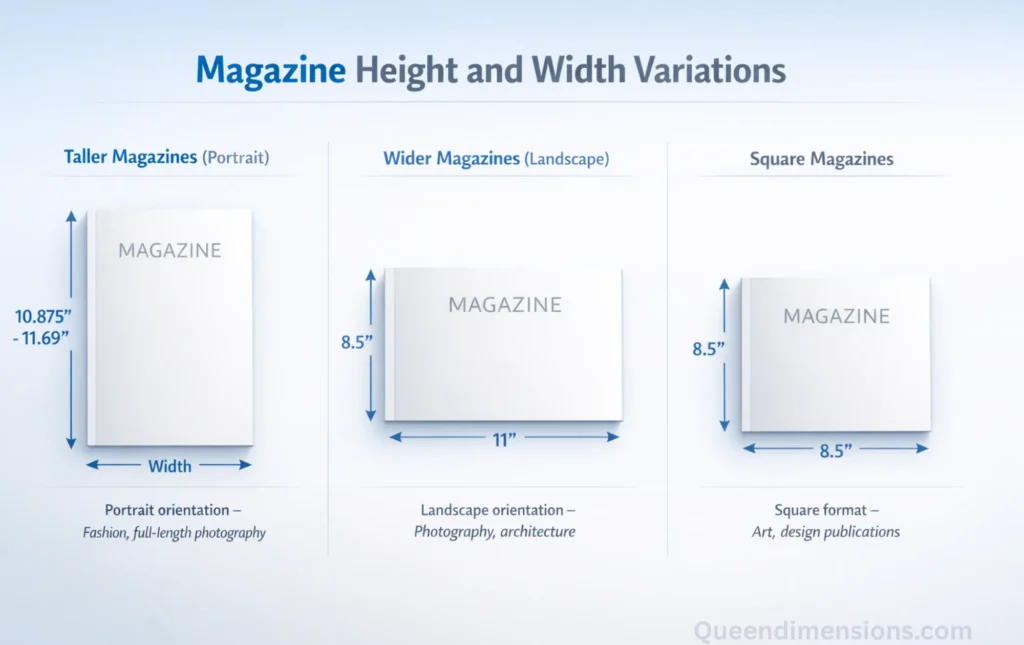
Magazine height and width ratios determine how content flows on each page. Vertical formats suit certain subjects while horizontal layouts work better for others.
Taller Magazine Formats (Portrait Orientation)
Taller magazines typically measure 10.875 to 11.69 inches in height. Fashion publications prefer vertical formats because they showcase full-length model photography.
The extra height creates elegant proportions. Portrait orientation also makes text columns more readable with appropriate line lengths.
Newsstand display works better with taller formats. They stand out among horizontal publications on shelves.
Wider Magazine Formats (Landscape Orientation)
Wider magazines emphasize horizontal space over vertical height. Photography and art magazines often choose landscape formats to display panoramic images.
Some specialty publications use 11 × 8.5 inches (landscape letter). This orientation suits architectural photography, automotive content, and scenic landscapes. The wide format provides natural aspect ratios for these subjects.
Production requires special binding considerations. Landscape magazines need reinforced spines to prevent sagging.
Square Format Magazines (8.5 × 8.5 inches)
Square magazines measure equal width and height, typically 8.5 × 8.5 inches (216 × 216 mm). Art and design publications favor this symmetrical format.
Square dimensions create balanced layouts. Designers can rotate images without cropping concerns. The format costs approximately 15% more than standard letter size due to non-standard paper cuts.
Coffee table books and photography collections frequently use square formats for premium appeal.
Specialized Magazine Sizes and Custom Dimensions
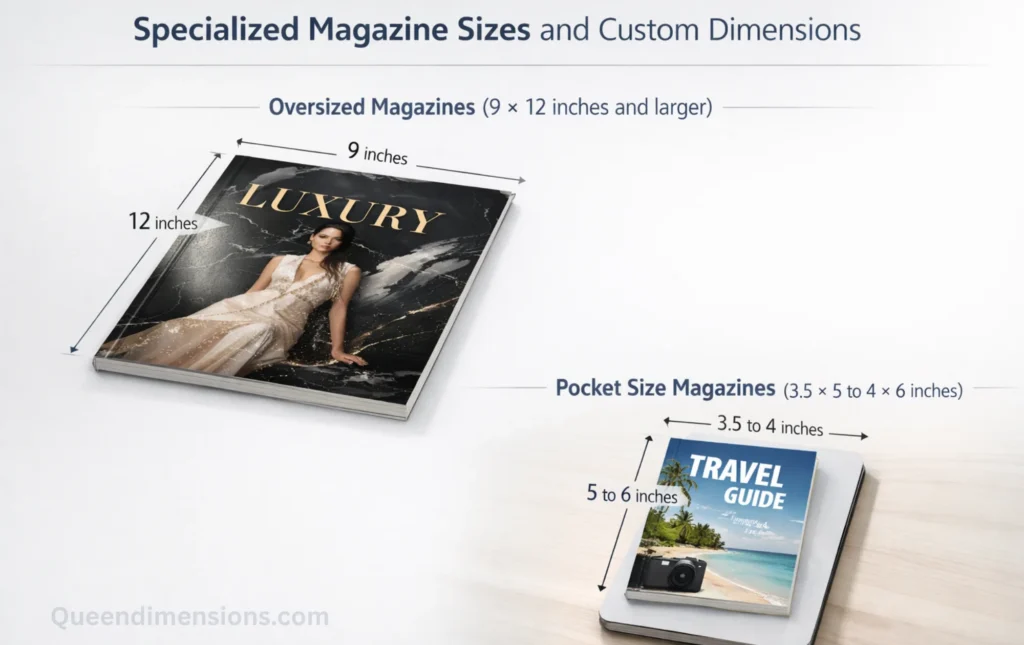
Custom magazine dimensions serve niche markets and premium positioning. Publishers use non-standard sizes to differentiate their publications.
Oversized Magazines (9 × 12 inches and larger)
Oversized magazines start at 9 × 12 inches and extend to 12 × 15 inches or larger. High-end fashion, architecture, and fine art publications use these premium dimensions.
Production costs increase 50-70% compared to standard letter size. The larger paper stock, specialized handling, and custom binding justify premium cover prices. Luxury brands use oversized formats to communicate exclusivity.
These dimensions showcase photography with exceptional detail. The expanded canvas allows designers to create immersive visual experiences.
Pocket Size Magazines (3.5 × 5 to 4 × 6 inches)
Pocket magazines range from 3.5 × 5 inches to 4 × 6 inches (89 × 127 mm to 102 × 152 mm). Travel guides, poetry collections, and mini zines use these ultra-compact dimensions.
The small format reduces production costs by approximately 30%. Readers can carry them in jacket pockets, purses, or glove compartments. Distribution costs drop significantly due to reduced weight.
Pocket size works best for focused content. The limited space forces concise writing and selective imagery.
US vs International Magazine Dimensions (A4, A5 Standards)
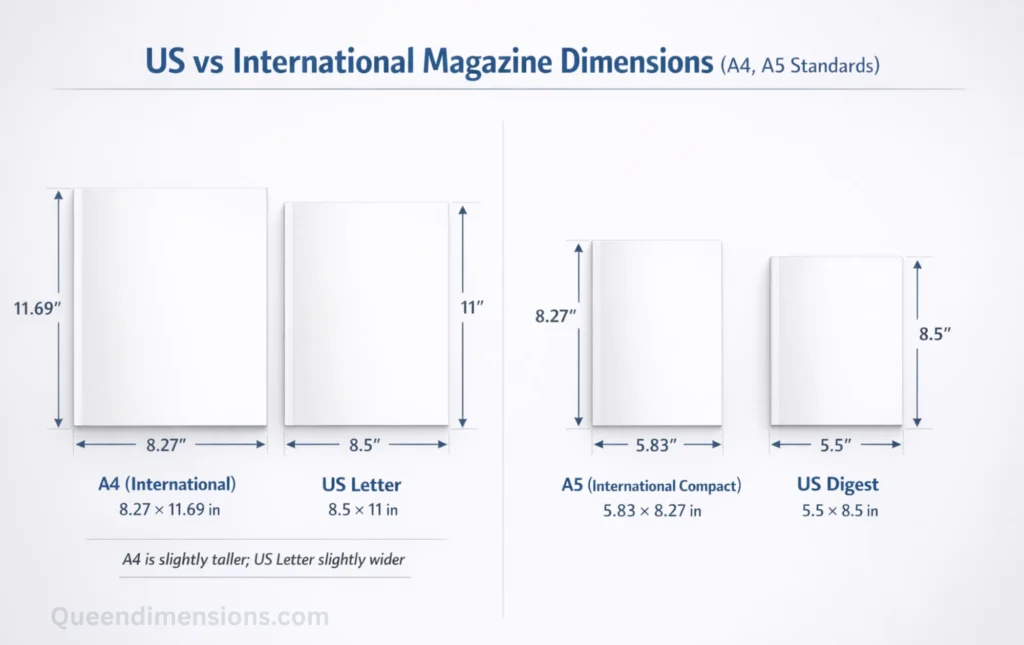
European publishers use the A-series paper system based on metric measurements. US formats follow imperial dimensions that don’t align with A4 or A5.
A4 vs US Letter Magazine Dimensions
A4 measures 8.27 × 11.69 inches (210 × 297 mm). US Letter measures 8.5 × 11 inches (216 × 279 mm). A4 is slightly narrower but taller than American letter size.
The 0.69-inch height difference affects page layout significantly. Designers must adjust column grids when converting between formats. A4 provides more vertical space for text flow.
International publications printing in America often adapt to US letter size. This avoids custom paper orders and reduces costs.
A5 and Other International Compact Sizes
A5 dimensions are 5.83 × 8.27 inches (148 × 210 mm). This closely resembles US digest size at 5.5 × 8.5 inches.
European compact magazines use A5 for consistency with the international paper system. The format scales perfectly from A4 by cutting sheets in half. This mathematical relationship eliminates waste.
Publishers distributing globally must choose between formats. Many print separate editions for different markets.
RAM Bed Dimensions(Length, Width, Depth & Cargo Specs)
Magazine Binding Types and Their Impact on Dimensions
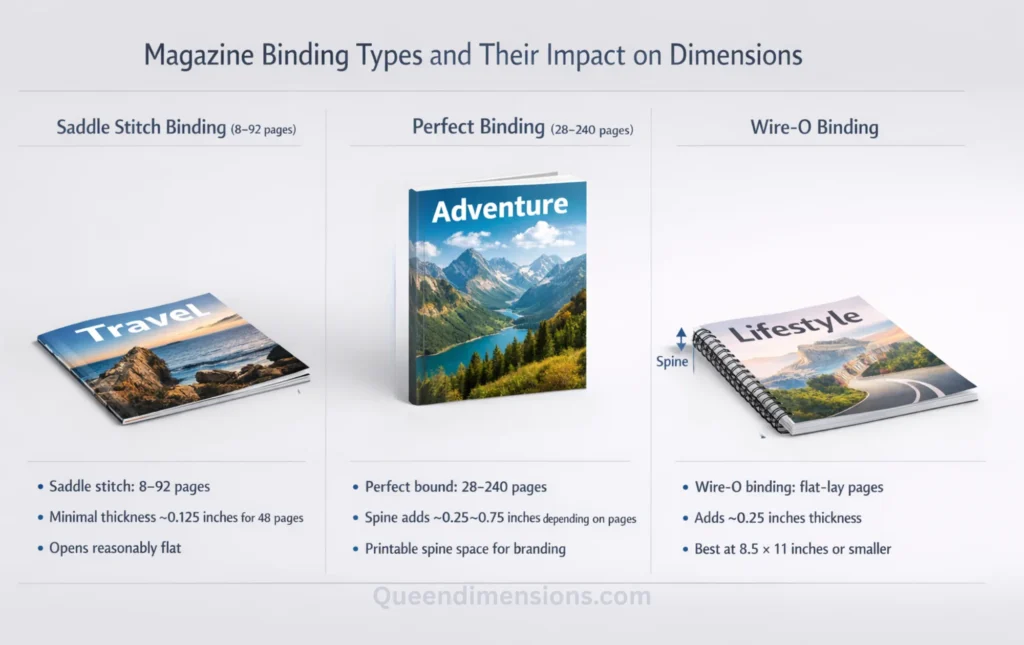
Magazine binding methods directly affect final thickness, durability, and page capacity. Each binding type requires specific dimension considerations.
Saddle Stitch Binding (8-92 pages)
Saddle stitch binding uses metal staples through the magazine’s fold. This economical method works for 8 to 92 pages.
The binding adds minimal thickness to overall dimensions. A 48-page saddle stitched magazine measures approximately 0.125 inches thick with standard paper. Letter size and digest formats work best with this binding.
Most commercial printers offer saddle stitching as standard service. The process allows magazines to open reasonably flat without specialized equipment.
Perfect Binding (28-240 pages)
Perfect binding creates a squared spine like paperback books. This premium method requires minimum 28 pages and supports up to 240 pages.
Production costs run 50-60% higher than saddle stitching. The glued spine adds approximately 0.25 to 0.75 inches to overall thickness depending on page count. Spine width becomes printable space for title and branding.
Libraries and collectors prefer perfect bound magazines for long-term preservation. The binding withstands repeated reading better than stapled alternatives.
Wire-O Binding (Complete flat-lay capability)
Wire-O binding uses double-loop wire that allows 360-degree rotation. Pages lay completely flat when opened.
Cookbooks, instruction manuals, and reference magazines use this binding. Production costs exceed other methods by 70-80%. The wire binding prevents traditional spine printing, requiring alternative identification methods.
The binding adds approximately 0.25 inches to overall dimensions. Wire-O bound magazines work best at 8.5 × 11 inches or smaller for optimal functionality.
Print vs Digital Magazine Dimensions Specifications
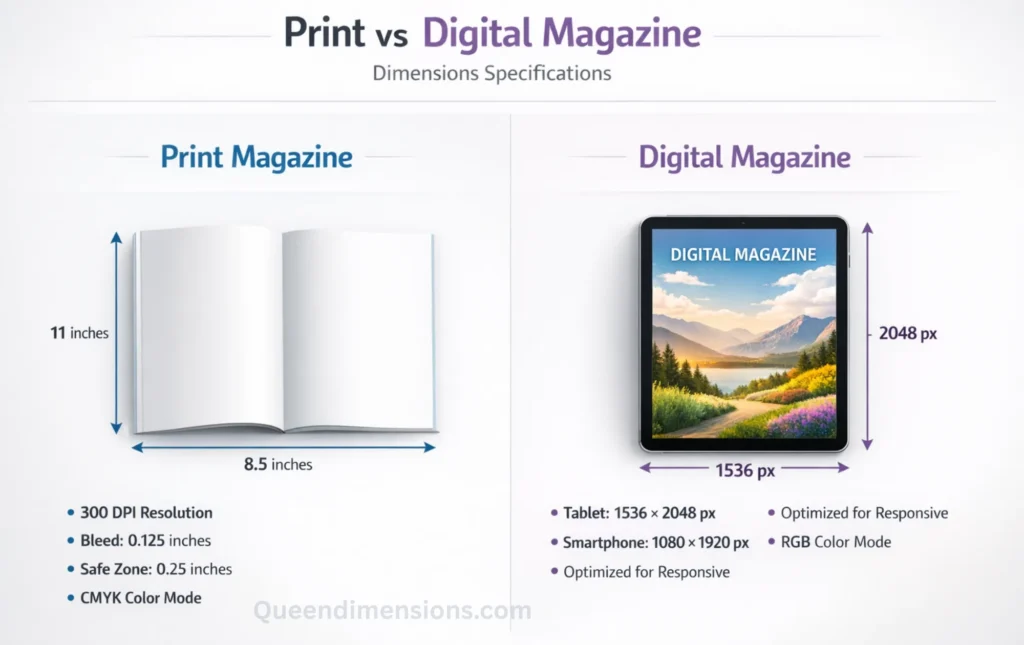
Print Magazine Technical Specifications
Print magazines require 300 DPI resolution for professional quality. This high resolution ensures sharp text and crisp images when physically printed.
Bleed areas extend 0.125 inches (3mm) beyond trim lines. This prevents white edges after cutting. Safe zones maintain 0.25 inches margins from edges for critical content like text and logos.
CMYK color mode converts digital colors to printing ink specifications. Paper weight affects final magazine thickness. Text weight paper (60-100 lb) suits interior pages while cover stock (80-130 lb) provides protective strength.
Digital Magazine Dimensions and Formats
Digital magazines use pixel dimensions optimized for various screen sizes. Desktop viewers display best at 1024 × 1366 pixels. Tablets require 1536 × 2048 pixels for high-resolution screens.
Smartphone formats typically measure 1080 × 1920 pixels for portrait viewing. Screen resolution operates at 72-150 PPI rather than print’s 300 DPI requirement. RGB color mode displays accurately on backlit screens.
Responsive design allows single content to adapt automatically across devices. File size optimization ensures fast loading without sacrificing visual quality.
How to Choose the Perfect Magazine Dimensions for Your Publication
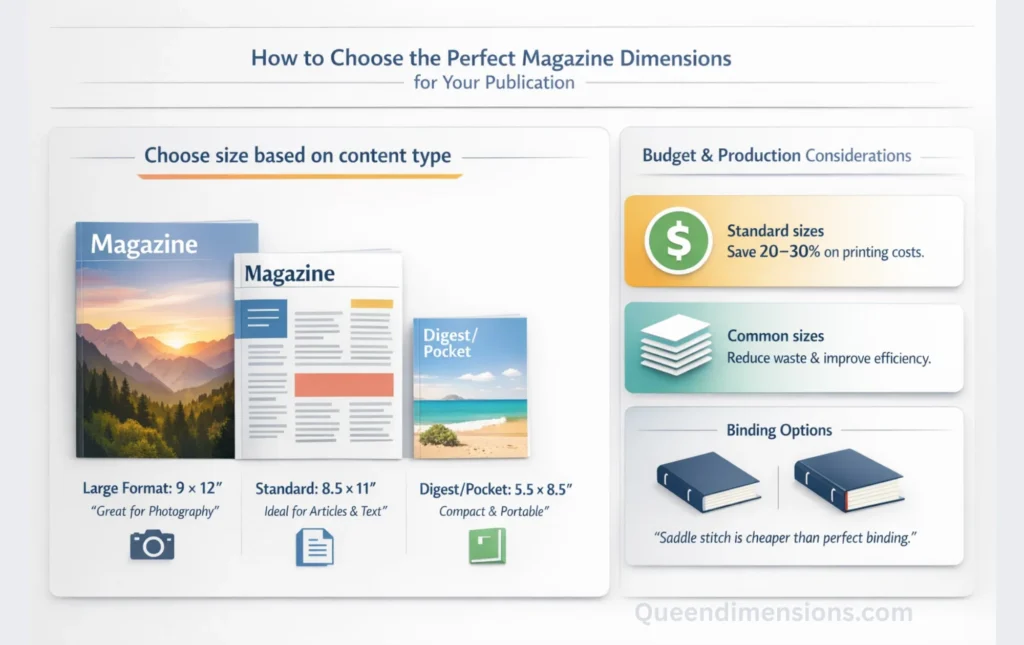
Content-Based Dimension Selection
Photography-heavy content benefits from larger formats like 9 × 12 inches or tabloid. The expanded canvas showcases images with maximum detail and impact.
Text-focused publications work well with standard 8.5 × 11 inch letter size. The format provides optimal line lengths for comfortable reading. Travel and portable reads suit digest or pocket dimensions for easy carrying.
Premium positioning often requires oversized custom formats. The distinctive size communicates quality and justifies higher cover prices.
Budget and Production Cost Considerations
Standard sizes save 20-30% on printing costs compared to custom dimensions. Commercial printers keep letter and digest formats in stock, reducing material waste.
Paper efficiency improves with common cuts. Digest size uses exactly half a letter sheet, eliminating scrap. Mailing and distribution costs increase with weight and non-standard dimensions.
Binding method impacts overall budget. Saddle stitching costs significantly less than perfect binding or wire-o for similar page counts.
Real-World Magazine Dimension Examples
Each publication chose dimensions matching their content priorities and reader expectations.
- Vogue Magazine: 8 × 10.875 inches – Optimized for fashion photography, emphasizing vertical model shots and elegant proportions.
- Time Magazine: 8 × 10.75 inches – Balances news content and imagery for a versatile reader experience.
- National Geographic: 8 × 10.875 inches – Showcases stunning photography while maintaining a manageable size.
- Reader’s Digest: 5.5 × 8.5 inches – Prioritizes portability and easy handling for readers on the go.
FAQ’s
What is the standard magazine size in the United States?
The standard magazine size measures 8.5 × 11 inches (216 × 279 mm) in the USA. Approximately 60-70% of consumer magazines use this format because it matches letter paper and reduces printing costs.
What size is a Vogue magazine?
Vogue measures 8 × 10.875 inches, which is slightly taller and narrower than standard letter size. This custom dimension emphasizes vertical fashion photography and creates premium shelf presence.
Are magazines A4 or A5 size?
US magazines typically use 8.5 × 11 inches (letter), not exact A4. European A4 measures 8.27 × 11.69 inches. Digest size at 5.5 × 8.5 inches resembles A5 (5.83 × 8.27 inches) but uses different proportions.
How big is a digest size magazine?
Digest magazines measure 5.5 × 8.5 inches (140 × 216 mm). This compact format costs approximately 30-40% less to produce than letter size and fits easily in bags for portable reading.
What is the difference between letter size and tabloid magazine dimensions?
Letter measures 8.5 × 11 inches while tabloid spans 11 × 17 inches. Tabloid provides 4 times the area of letter size, creating dramatic visual impact but costing 40-50% more to produce.
How do you measure magazine dimensions correctly?
Measure from trim edge to trim edge, not including bleeds. Width always comes first, then height. Use a ruler to measure 8.5 inches wide × 11 inches tall for standard letter format.
What size frame fits an 8.5 × 11 inch magazine?
Use frames measuring 10 × 13 inches or 11 × 14 inches to accommodate an 8.5 × 11 inch magazine with matting. Always measure your specific magazine first as trim sizes vary slightly.
What are oversized magazine dimensions?
Oversized magazines start at 9 × 12 inches and extend to 12 × 15 inches or larger. These premium formats cost 50-70% more to produce but create luxury positioning for fashion and architecture publications.
How does magazine size affect production costs?
Standard 8.5 × 11 inch formats cost 20-30% less than custom sizes. Paper efficiency, binding compatibility, and printer equipment all impact final costs. Larger formats increase paper, handling, and distribution expenses proportionally.
What magazine size is best for photography?
Tabloid (11 × 17 inches) or oversized (9 × 12 inches+) dimensions showcase photography optimally. The larger canvas provides detail and visual impact. Square formats 8.5 × 8.5 inches also work well for art-focused publications.
Conclusion
Magazine dimensions fundamentally shape production costs, reader experience, and market success. Standard 8.5 × 11 inch letter size dominates American publishing for printing efficiency and reader familiarity.
Choose dimensions matching your content type and audience needs. Test physical mockups before committing to final formats. Standard sizes save money while specialized formats create premium positioning when budgets allow.

Hi, I’m Ethan Miller, the admin behind QueenDimensions.com. We make understanding Dimensions simple. Explore clear guides on realms, energy, and hidden layers of reality. No confusion, just clarity.