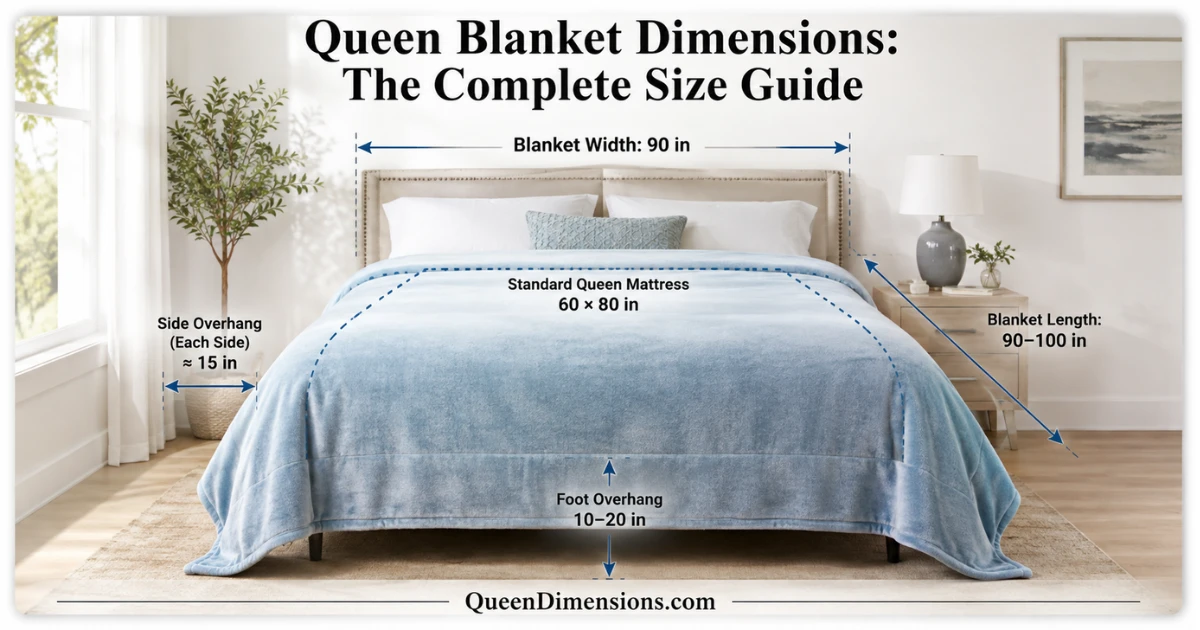
A queen blanket typically measures 90 inches wide by 90 to 100 inches long. That’s the short answer. But the right size for your bed depends on your mattress height, your sleep habits, and how much overhang you actually want.
This guide breaks down every measurement you need, plus the details competitors skip — like how mattress thickness changes your blanket size and how to care for the one you buy.
What Are the Standard Queen Blanket Dimensions?
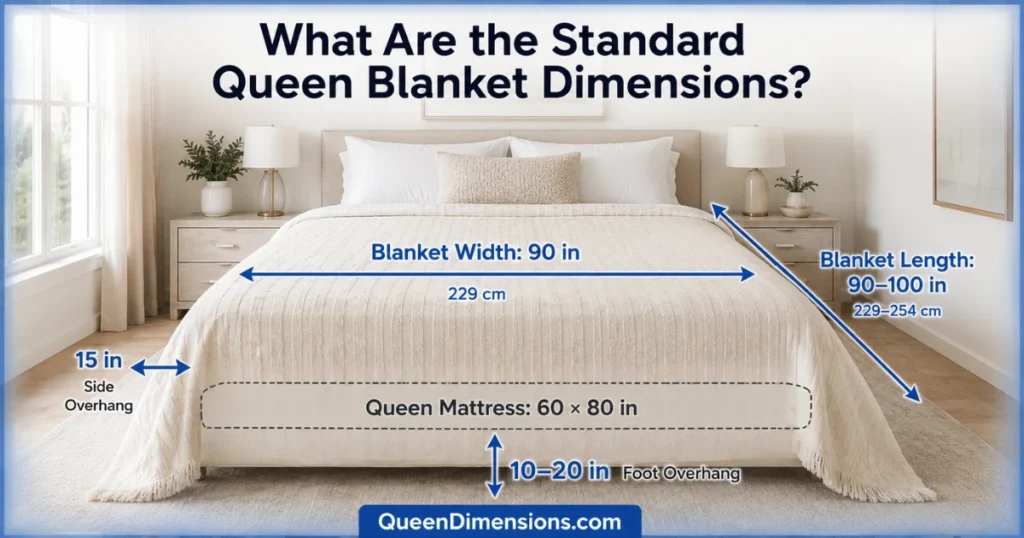
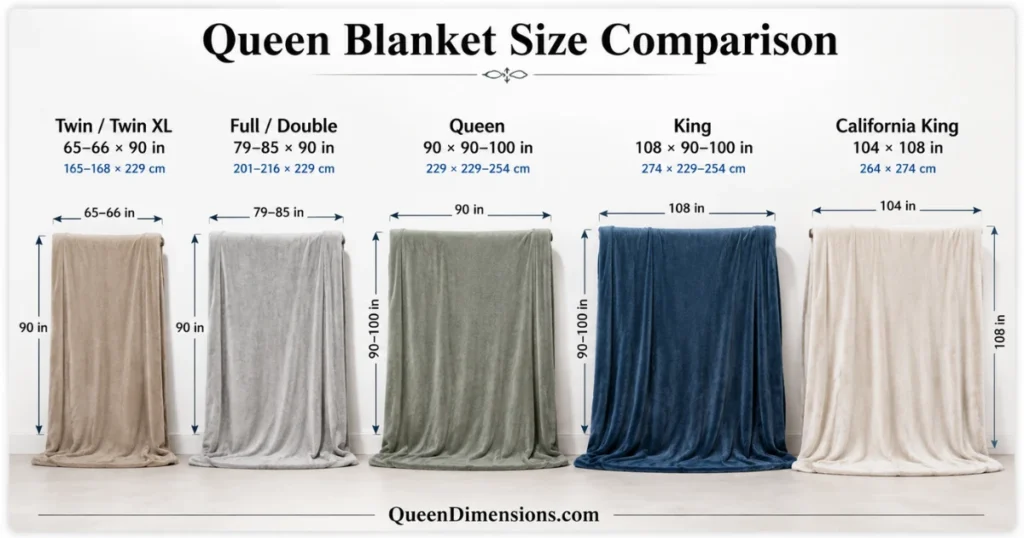
Queen blanket dimensions run 90 inches wide by 90 to 100 inches long, or about 229 by 229 to 254 centimeters. Some brands list queen blankets closer to 86 inches wide, so always check the product label before buying.
A standard queen mattress measures 60 inches wide by 80 inches long. That means a properly sized queen blanket gives you roughly 15 inches of overhang on each side and 10 to 20 inches at the foot of the bed for tucking.
This extra fabric isn’t just for looks. The overhang keeps cold air from sneaking in along the mattress edges, and it gives you enough slack to tuck the blanket under the mattress if you like a hotel-style fold.
Manufacturers don’t always agree on exact numbers, so treat 90×90-100 inches as a reliable range rather than a fixed rule. If your blanket runs a few inches short or long, it’s still within normal queen size territory.
More Post: Queen Bed and Mattress Dimensions(Size, Height, Length & Width)
Queen Blanket Size vs. Other Blanket Sizes
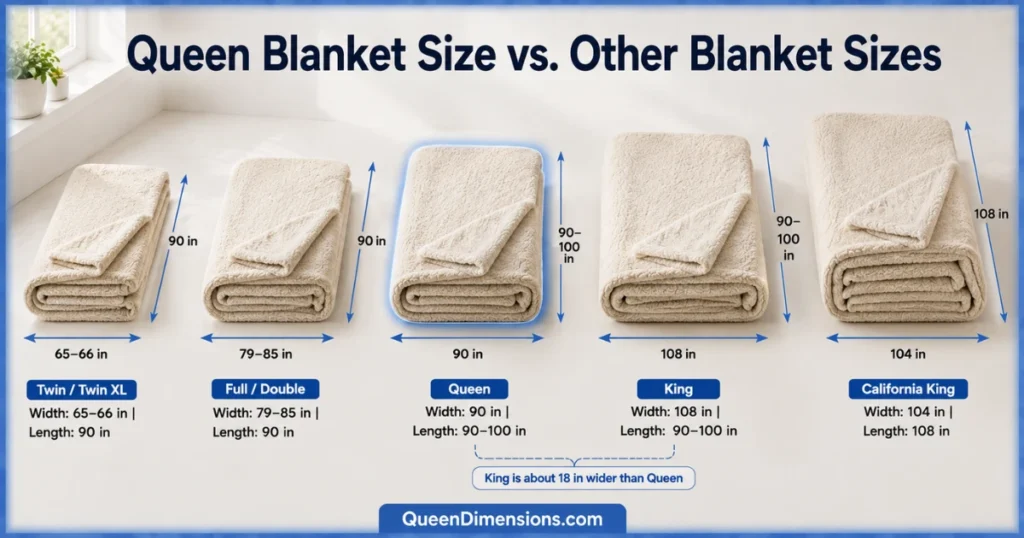
Blanket sizing follows your mattress size, but the categories often overlap. Knowing where queen blanket dimensions sit next to twin, full, king, and California king helps you avoid buying the wrong one.
Twin and Twin XL Blanket Dimensions
A twin blanket measures around 65 to 66 inches wide by 90 inches long. Twin XL versions run a few inches longer to match the taller Twin XL mattress used in dorm rooms.
These blankets suit a single sleeper and won’t offer enough width for two people. If you’re upgrading from twin to queen, expect roughly 25 extra inches of width.
Full (Double) Blanket Dimensions
A full size blanket, also called a double, measures about 79 to 85 inches wide by 90 inches long. It’s designed for full-size mattresses, which sleep one person comfortably.
Full blankets are sometimes labeled full/queen for convenience. That combo size gives a full bed generous overhang while fitting a queen bed a bit more snugly.
King Blanket Dimensions
A king blanket measures 108 inches wide by 90 to 100 inches long. That’s roughly 18 inches wider than a queen blanket, making it a popular upgrade for couples who want extra coverage.
Some shoppers actually buy a king blanket for a queen bed on purpose. The added width means more tucking room and a fuller, more layered look on the mattress.
California King Blanket Dimensions
A California king blanket runs about 104 by 108 inches, narrower but longer than a standard king. It matches the slim, elongated shape of a Cal King mattress.
This size works well for taller sleepers who need extra length to keep their feet covered. Cal King blankets are less common, so expect a smaller selection than standard king or queen.
More Post: California King Bed and Mattress Dimensions(Size, Height, Length & Width)
Queen Blanket Size Comparison
More Post: King Bed Size and mattress Dimensions(Size, Height, Length & Width)
How Mattress Thickness Affects Queen Blanket Size
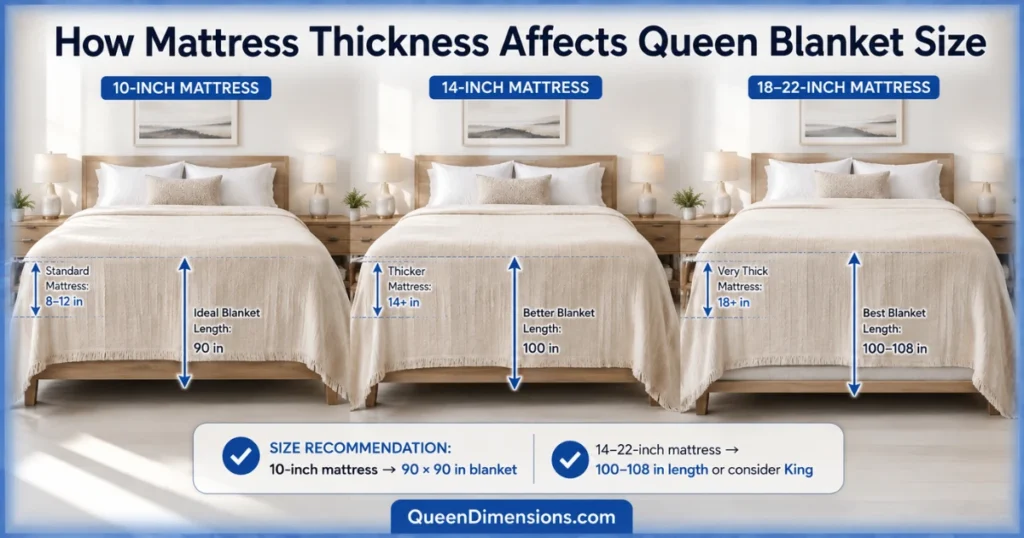
Standard mattresses run 8 to 12 inches thick, but pillow-tops and toppers can push that height to 18 inches or more. A blanket sized for a thin mattress will look skimpy on a tall one.
The thicker your mattress, the more fabric you need just to reach the floor-facing edge, let alone tuck it in. This is one of the most overlooked factors in choosing queen blanket dimensions.
Queen Blankets for Standard 10-Inch Mattresses
For a queen mattress around 10 inches thick, a standard 90×90-inch blanket usually works fine. You’ll still get enough overhang on the sides for a clean, tucked-in look.
This is the most common mattress height in the US market. Most off-the-shelf queen blankets are built with this thickness in mind.
Queen Blankets for Thicker 14 to 22-Inch Mattresses
Once your mattress climbs past 14 inches, thanks to a pillow-top or a thick topper, size up. Look for a queen blanket closer to 100 to 108 inches long, or consider a king blanket instead.
Skipping this step is a common mistake. Buyers who ignore mattress height often end up with a blanket that barely reaches the mattress edge, let alone tucks underneath it.
More Post: Queen Size Bed Dimensions In Inches (Size, Height, Length & Width)
How to Choose the Right Queen Blanket for Your Bed
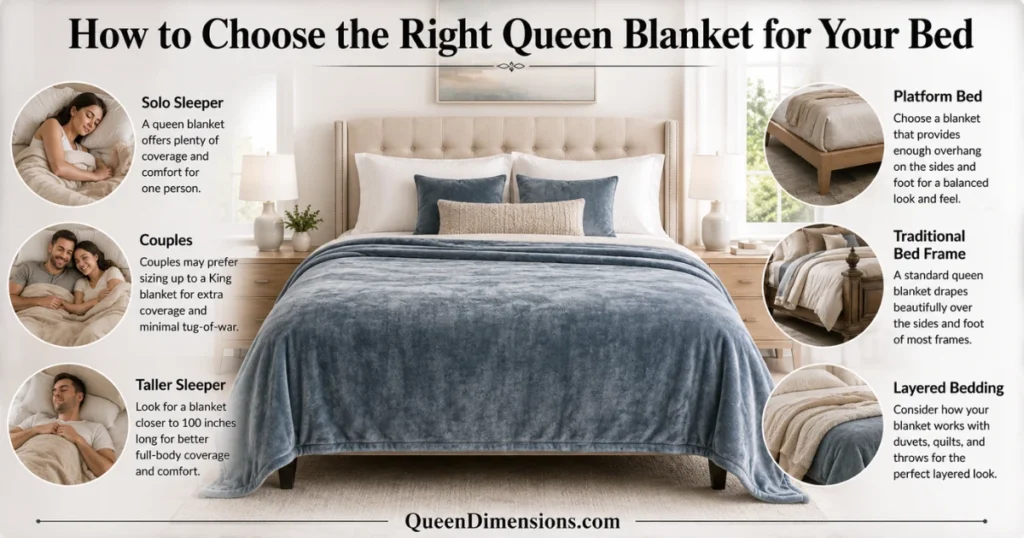
Size alone doesn’t guarantee comfort. Your sleep habits, body size, and bedroom layout all play a role in picking the best queen size blanket for your space.
Sleeping Alone vs. With a Partner
A solo sleeper can usually get by with a standard queen blanket sized to match the mattress. Couples, on the other hand, often benefit from sizing up to king for extra pull-free coverage.
Sharing a blanket that’s too narrow leads to nighttime tugging. A wider blanket solves this without needing separate covers.
Body Size and Height Considerations
Taller sleepers should look for queen blankets on the longer end of the range, closer to 100 inches. This keeps your feet from poking out the bottom on cold nights.
If you tend to kick off covers, a snugger fit closer to your mattress dimensions works better. There’s no single right answer here — it comes down to your own sleep style.
Bed Frame Style
Platform beds look cleanest with a blanket that doesn’t overhang too far past the frame. A queen blanket sized close to your mattress avoids bunching or puddling on the platform base.
Traditional bed frames with box springs can handle more overhang without looking messy. In that case, a slightly larger blanket adds a fuller, more hotel-style finish.
Layering with a Duvet or Comforter
If you already sleep under a thick comforter, a lighter queen blanket underneath adds warmth without bulk. This layering approach is common in colder climates during winter months.
For those using only a top sheet, a heavier blanket does more of the insulating work on its own. Match your blanket weight to how many other layers you’re already using.
More Post: Queen Murphy Bed & Cabinet Size Dimensions (Size, Height, Length & Width)
Best Materials for Queen Size Blankets

Material affects warmth, breathability, and how the blanket feels against your skin. Each fabric has distinct trade-offs worth knowing before you buy.
Cotton
Cotton is breathable, durable, and machine washable, making it a low-maintenance choice for most households. It works well year-round and suits people with sensitive skin or allergies.
Cotton blankets also have good moisture-wicking properties. This helps regulate body temperature for warmer sleepers who overheat under heavier fabrics.
Wool
Wool offers natural insulation and stays warm even in damp conditions, making it ideal for colder climates. It’s long-lasting but usually needs hand washing or dry cleaning.
Some sleepers are allergic to wool, so it’s worth checking before committing to a full-size blanket. Its durability, though, often makes up for the extra care it requires.
Fleece and Microfiber
Fleece and microfiber are synthetic, lightweight, and trap heat efficiently for the price. Both are quick-drying and resist wrinkling, which makes them easy to maintain.
These materials are a popular choice for budget-conscious buyers. They won’t offer the same breathability as natural fibers, but they perform well in cooler rooms.
Linen
Linen is airy, breathable, and gets softer with every wash, making it a favorite for warm sleepers. It’s less insulating than wool or fleece, which suits hot climates or summer use.
Linen blankets are durable over time despite their lightweight feel. The trade-off is less warmth, so pair it with another layer during winter.
How to Wash and Care for a Queen Blanket

Most queen blankets are machine washable, but always check the care label first. Front-load or high-capacity machines handle large blankets better than compact top-loaders.
Use cold or warm water on a gentle cycle with a mild detergent to protect color and softness. Leave enough room in the drum for the blanket to move freely during the wash.
For drying, air-drying or a low-heat dryer setting helps prevent shrinkage. Wool blankets are the exception here — skip the dryer entirely and avoid machine washing unless the label says otherwise.
Most experts recommend washing blankets three to four times a year rather than weekly like sheets. Over-washing can wear down fibers faster, especially with natural materials like wool and linen.
Frequently Asked Questions About Queen Blanket Dimensions
What size is a queen blanket in inches?
A queen blanket measures 90 inches wide by 90 to 100 inches long.
What size is a queen blanket in centimeters?
In centimeters, a queen blanket is about 229 by 229 to 254 cm.
Is a queen blanket the same as a full/queen blanket?
Not exactly — full/queen blankets fit both sizes but offer less overhang on a queen bed.
Should I size up to a king blanket for my queen bed?
Yes, if you want extra tucking room or share the bed with a partner.
What size blanket fits a 12-inch-thick queen mattress?
Look for a queen blanket closer to 100 to 108 inches long for proper coverage.
Can I wash a queen blanket in a regular washing machine?
Most cotton and synthetic queen blankets are machine washable on a gentle cycle.
What’s the difference between a queen blanket and a queen quilt?
A blanket is a single warmth layer, while a quilt has three stitched layers including batting.

Hi, I’m Ethan Miller, the admin behind QueenDimensions.com. We make understanding Dimensions simple. Explore clear guides on realms, energy, and hidden layers of reality. No confusion, just clarity.